
Last updated November 24, 2026
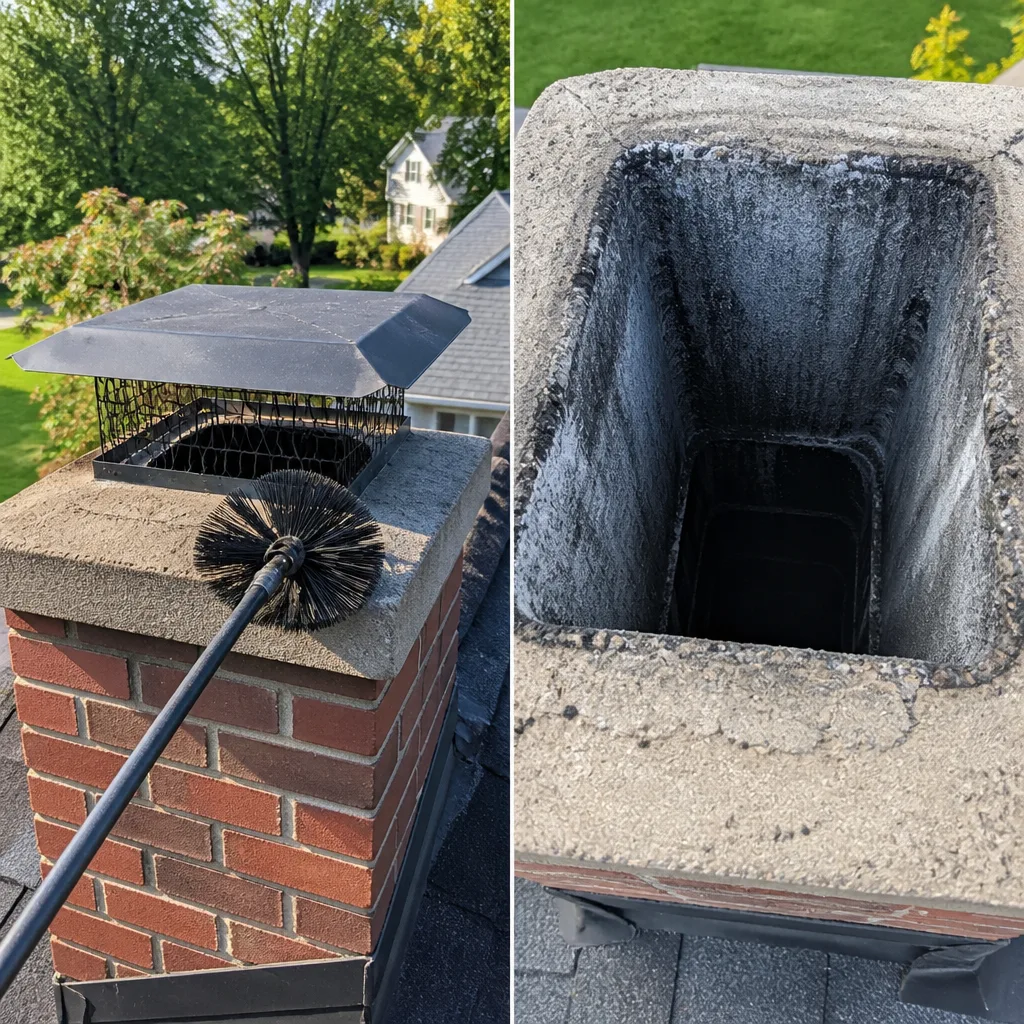 Sweep & inspection
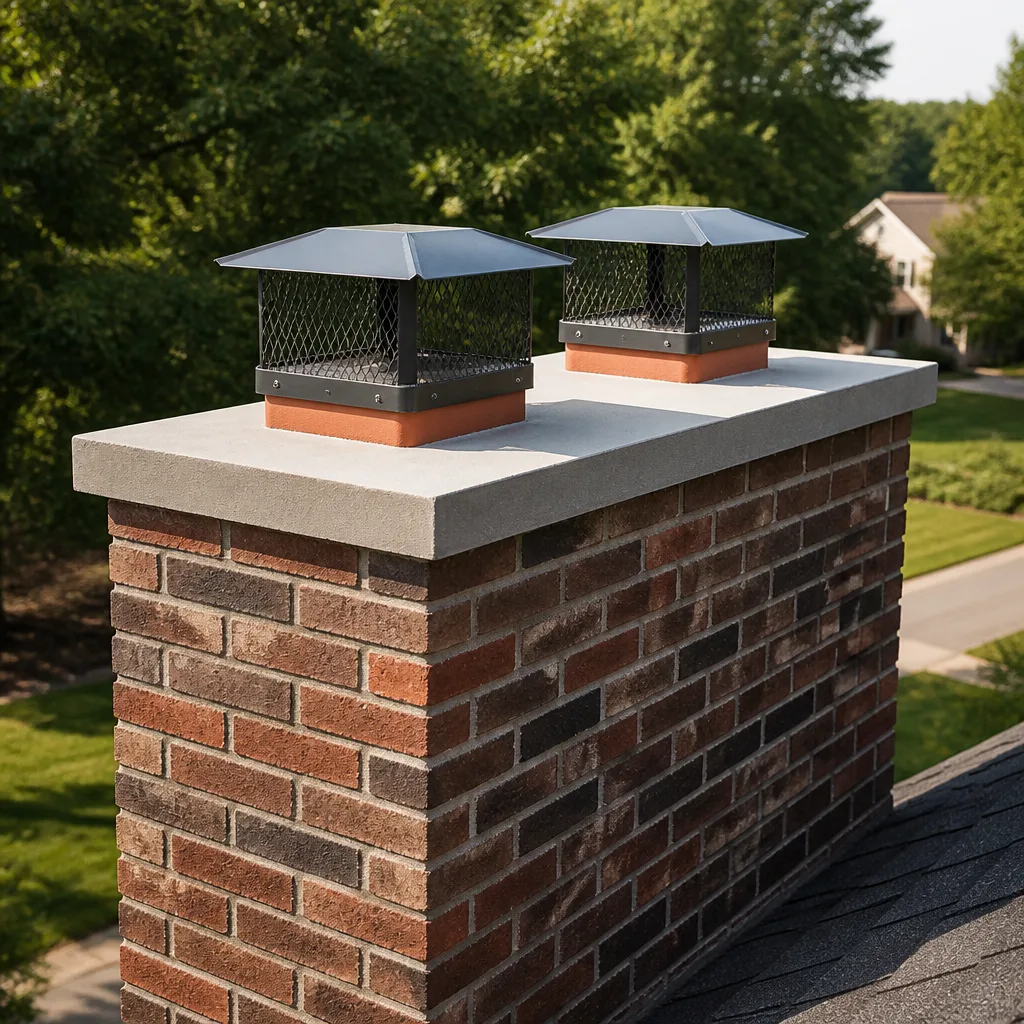 Caps & crowns
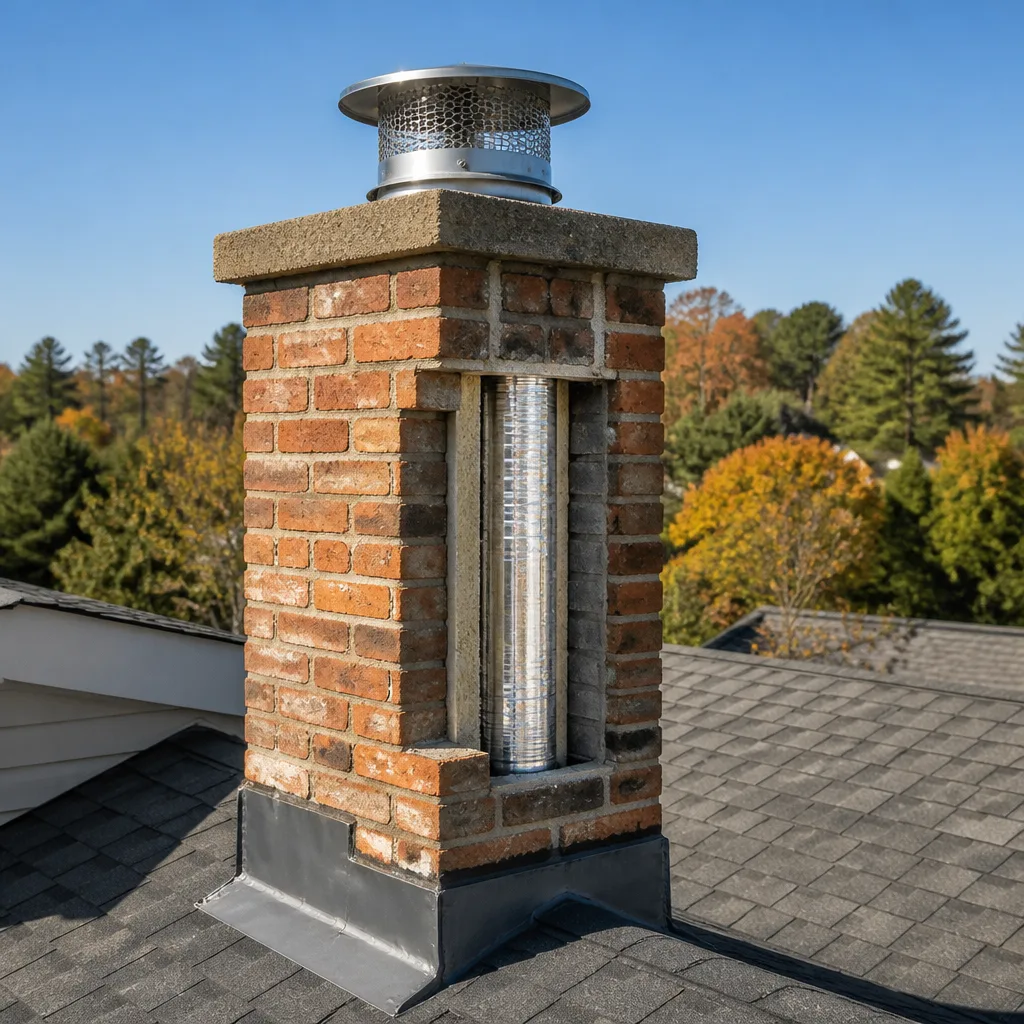 Flue relining
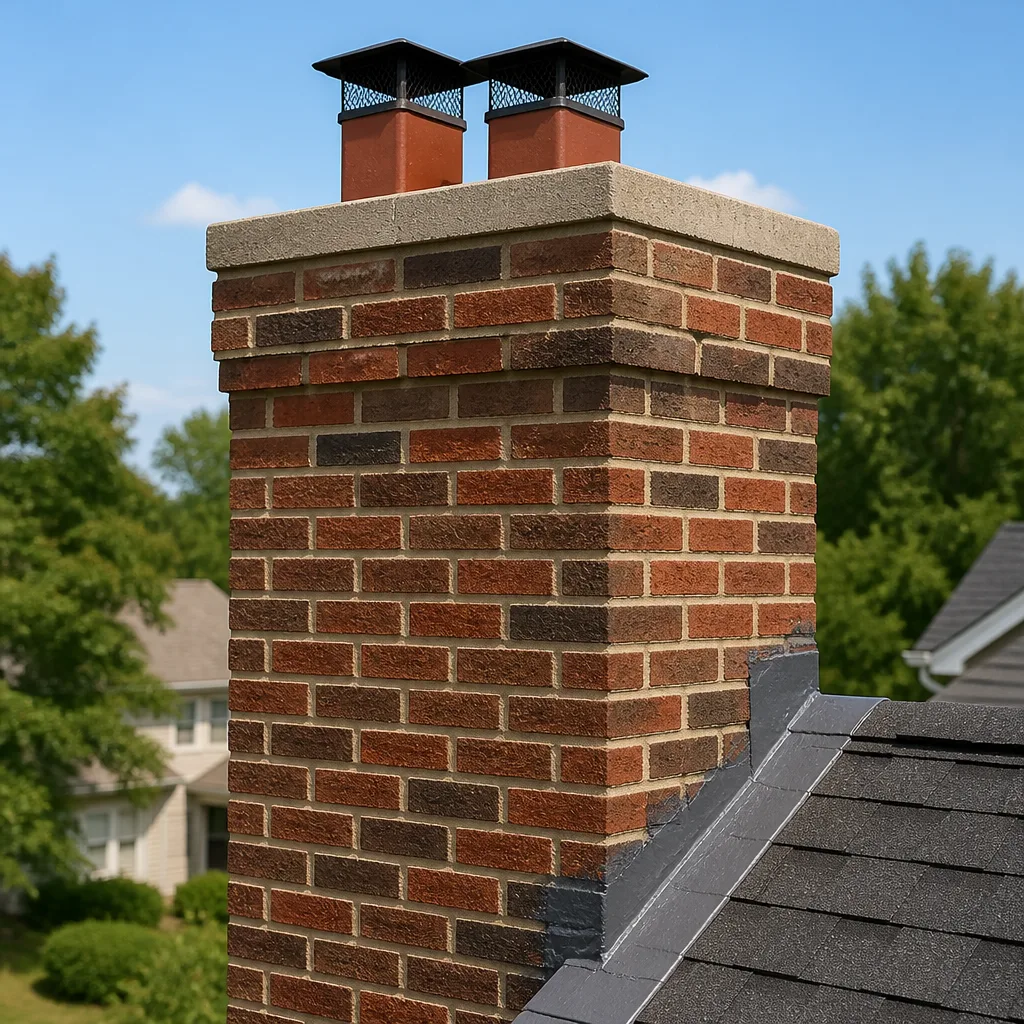 Masonry repair
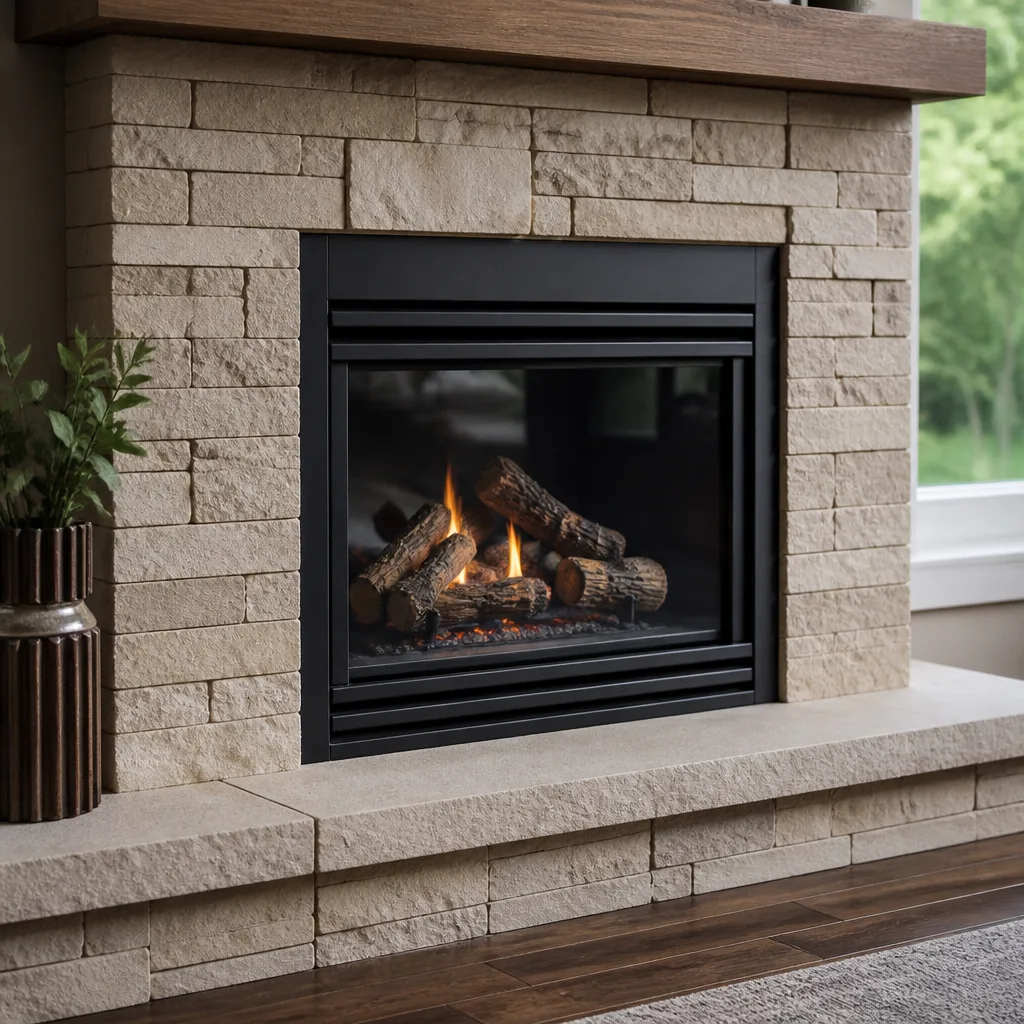 Gas fireplace service
Level 1 sweep and inspection to the NFPA 211 annual standard - flue, crown, cap, and flashing checked and photographed
Chimney sweep logs do not sweep chimneys. They loosen some creosote - which then falls where a brush and vacuum still have to collect it.
Chimney Sweep Troubleshooting in Wheat Ridge: Common Problems and How to Fix Them
A smoky firebox after a cleaning isn’t a failed cleaning. It’s a diagnostic signal that something structural was missed, and treating it as a cleaning problem wastes money while the real issue stays exactly where it was. Most of the calls we get about smoke, odor, and weak draw trace back to one of five diagnosable root causes. Which one you have decides whether you’re looking at a straightforward sweep or a liner repair. This guide walks through each problem, how to tell them apart, and what a fix actually involves in Wheat Ridge, where the altitude and the freeze-thaw cycle both shape how a chimney behaves.
Quick Answer
Smoke backdraft, lingering odor, and poor draw are almost always caused by one of five things: a flue that’s too cold or too short for the fire, glazed third-degree creosote the brush can’t reach, spalling or crumbling brick mortar, a damper that no longer seats, or a flue sized wrong for the appliance. A camera inspection tells you which. In Wheat Ridge, at 5,440 feet, thinner air lowers draft pressure, so some of what looks like a chimney failure is really an altitude adjustment problem. Diagnose first, then decide between cleaning and repair.
Styles & brands we work with
- Sweep & inspection
- Caps & crowns
- Flue relining
- Masonry repair
- Gas fireplace service
Table of Contents
- Backdraft vs. Poor Draw: How to Tell Them Apart
- Why Wheat Ridge Elevation Affects Draft Pressure
- The Creosote Stages That Cause Odor After Cleaning
- Spalling Brick: Cosmetic Flaking or Structural Damage?
- Damper Seating Failures a Visual Sweep Misses
- Flue Sizing and Appliance Mismatches
- A Step-by-Step Troubleshooting Sequence
- When to Call a Professional
Backdraft vs. Poor Draw: How to Tell Them Apart
The timing of the smoke tells you which problem you have. Backdraft pushes smoke into the room at startup, when you first light the fire, and then it clears. Poor draw keeps smoke spilling or the fire sluggish through the whole burn, even after the flue has had time to warm. Homeowners often describe both as “my chimney doesn’t work,” but they’re different failures with different fixes.
Backdraft means air is moving down the flue instead of up. A cold flue is heavier than the room air, so on the first light of the day it can act like a reversed column. The fire has to overcome that weight before it starts drafting. If your firebox smokes for a few minutes and then settles, you’re likely dealing with a cold-flue backdraft. A pre-warm with a rolled newspaper torch held near the damper often gets it drafting in a minute or two. Persistent startup backdraft after that points to pressure problems in the house, like a tight building envelope or a kitchen and bath exhaust fan pulling the pressure down.
Poor draw is a sustained problem. The fire lights but burns lazy, smoke drifts from the top of the firebox opening, and the glass soots up. Causes include:
- A flue that’s too short for the appliance connection height
- A flue blocked or restricted by debris, a nest, or a collapsed liner section
- A flue that’s oversized for the firebox, so the smoke cools before it exits
- Negative pressure inside the house, often from a modern furnace or a tightly sealed home
- A partially closed or damaged damper
In our experience in Wheat Ridge, startup backdraft is common in the older homes near Wheat Ridge’s Sloan’s Lake edge and the neighborhoods around 38th Avenue, where chimneys were built for open fireplaces and now serve inserts. If smoke arrives mid-burn instead of at startup, that’s a different diagnosis, and you’ll want a full Chimney Sweep Wheat Ridge inspection rather than a guess.
Why Wheat Ridge Elevation Affects Draft Pressure
Wheat Ridge sits at 5,440 feet, and at that elevation the air is thinner. A cubic foot of air at altitude weighs less than the same cubic foot at sea level. Draft is driven by the difference in weight between the hot column of exhaust gas in the flue and the cooler air outside it. Thinner air means a smaller weight difference to push smoke up and out.
The practical result is that a chimney that drafts fine at sea level can be marginal in Wheat Ridge. A flue that would be oversized at lower elevation is even more so here, because the smoke has less buoyancy to keep it moving. What compensates for that in a Wheat Ridge home:
- A well-sized flue. Matching the flue’s cross-section to the appliance helps more at altitude than it does at lower elevations. Oversizing hurts draft.
- Warming the flue before lighting. In a Wheat Ridge winter, the flue is often colder than the room, and a pre-warm gets the column moving.
- Adding make-up air. If the house is tight, a cracked window near the fireplace during startup can restore the pressure balance.
- Extending the flue if it’s short. A flue that doesn’t clear the roof properly will struggle at this elevation in a way it might not elsewhere.
- Fixing negative pressure sources. A furnace or exhaust fan pulling air out of the house can overwhelm an altitude-marginal chimney.
One thing worth knowing: gas appliances lose efficiency at altitude too, and a chimney sized for a gas boiler at sea level may need attention in Wheat Ridge. If you have a wood insert or a gas fireplace and the draw feels weak every winter, that’s a signal to look at the flue geometry, not just clean it. When we look at a Wheat Ridge chimney, the elevation is part of the diagnostic picture, not an afterthought.
The Creosote Stages That Cause Odor After Cleaning
Odor after a cleaning usually means the wrong kind of deposit is still in the flue. A rotary brush removes soot and light creosote, but it doesn’t touch glazed third-degree creosote. That’s the clue. If the smell is still there after a sweep, the flue likely has glazed deposits on the walls that a nylon or poly brush just polishes over.
Creosote builds in three recognizable forms:
First-degree creosote is a light soot-and-ash dusting. It brushes off easily and the flue looks about as clean as it should after a sweep.
Second-degree creosote is a flaky, crusty layer of deposits clinging to the flue wall. It takes a stiffer brush and rotary action to break up, and it often signals that the fire is burning cool or the wood is wet.
Third-degree creosote is the glazed, tar-like film that coats the flue like a hard shell. A rotary brush slides over it. This is the stage that produces the sharp, smoky smell in the house even after the flue is brushed out. It’s also the stage that carries the highest fire risk because it’s fuel sitting on the flue wall.
What actually removes third-degree creosote is not a stiffer brush. It’s a resurfacing treatment. HeatShield ceramic resurfacing is a specialty repair that smooths and rebuilds the interior of a deteriorating or heavily glazed flue, and it’s a repair most chimney companies don’t offer. It’s not a substitute for sweeping, and not every glazed flue needs it, but if a Wheat Ridge homeowner is being handed a cleaning quote for a problem that’s clearly a third-degree deposit, the diagnostic step is to have the flue scanned so you can see it. What separates a chimney that smells from one that doesn’t is often the flue surface, not the firewood.
Spalling Brick: Cosmetic Flaking or Structural Damage?
Spalling is brick that has lost a face. The brick surface flakes off in sheets or chunks, exposing the softer material underneath. The question isn’t whether spalling is happening because if you can see it, it is. The question is whether it’s cosmetic or structural, and that’s a function of how far the damage has gone.
Cosmetic spalling looks like a thin flake or a shallow scuff on the brick face. The structural body of the brick is intact, the mortar joints are tight, and a wire brush on the joint reveals solid material. In Wheat Ridge, this is common on chimneys that see the freeze-thaw cycle on the south and west faces. Sun hits the brick on a cold afternoon, moisture in the brick expands when it refreezes overnight, and the face flakes. It’s a sign the chimney needs a moisture barrier, not a rebuild.
Structural spalling looks different. The brick face is gone down to the core, the mortar joints have eroded or crumbled, and you can push a screwdriver blade into the joint without resistance. That’s the stage that needs repointing. The texture of the brick around a structural spall often crumbles when you rub it, and there may be a soft or hollow sound when you tap the brick with a light tool.
How to distinguish them in the field:
- Look at the depth of the flake. A thin layer flaking off is surface freeze-thaw. A deep chunk gone to the core is structural.
- Check the mortar joints. Tight joints mean the moisture is moving through the brick face. Crumbling joints mean water is getting behind the brick, and that’s the harder repair.
- Tap the brick lightly. A dull, hollow thud suggests a void behind the face.
- Look at the crown. A crown that’s cracked or missing is feeding water into the brick below, and every spall under it is a symptom of that.
A camera inspection tells the story clearly. We see a lot of Wheat Ridge chimneys where the spalling is cosmetic but the crown is failing, and the fix is crown work rather than masonry. That’s where a product like Gelco crown material shows its value, because a properly installed crown sheds water instead of feeding the freeze-thaw cycle. Get the diagnosis before you agree to a rebuild.
Damper Seating Failures a Visual Sweep Misses
A damper that doesn’t seat is one of the most overlooked drafting problems, and it’s the one a camera catches that a visual sweep doesn’t. From the top of the flue, a damaged damper looks like a dark plate. From the firebox, it looks like a closed plate. What a visual inspection misses is the gap around the edge, the warped or rusted hinge, or the broken gasket that lets air leak past even when the damper appears shut.
The symptoms of a seating failure are subtle:
- The house feels cooler near the fireplace when no fire is burning
- Cold air drifts into the room from the firebox on a windy day
- The fire is hard to control and the burn runs hot or fast
- Smoke smells drift into the room from the firebox after the fire is out
A camera run down the flue, or a look up from the firebox with the right lens, shows the damper from both sides. That’s how you can tell whether it’s a seating problem, a corrosion problem, or something else entirely. Damper repair often isn’t a full replacement. Sometimes it’s adjusting the frame, replacing a hinge pin, or replacing the plate, and sometimes the damper is fine and the leak is coming from elsewhere in the assembly. We don’t recommend damper work unless the camera evidence supports it, and we’ll show you the footage.
Damper work is one part of fireplace repair rather than sweeping. If your sweep found a clean flue but the fireplace still misbehaves, the damper is the next thing to check.
Flue Sizing and Appliance Mismatches
A flue that’s the wrong size for the appliance is a drafting problem that no amount of cleaning will fix. This is one of the most common causes of poor draw in Wheat Ridge, where older homes have been updated over the years and the flue has not been matched to the appliance that’s now connected.
The mismatch usually comes in two shapes. An oversized flue on a small appliance lets the smoke cool before it reaches the top, and cool smoke is heavy smoke. It loses buoyancy, drifts back into the firebox, and triggers the exact same symptoms as a blocked flue. An undersized flue can’t move the volume the appliance produces, so smoke backs up whenever the appliance runs at full output.
Where this usually shows up:
- An older open fireplace in Wheat Ridge now fitted with a wood insert, on the original flue
- A gas furnace or boiler connected to a flue sized for a different appliance
- A second appliance added to a flue that was never sized for two
- A flue relined to a smaller diameter without checking the appliance rating
The fix for a mismatched flue is often a liner sized to the appliance. We use DuraFlex flexible liner systems for this, and the reason is practical: DuraFlex handles older and non-standard flues where a rigid liner can’t be routed. That’s a better solution for a 1950s Wheat Ridge chimney than tearing into the brick. But it has to be the right diameter, and that comes from a measurement and a camera inspection, not a guess.
A Step-by-Step Troubleshooting Sequence
Here’s the sequence we work through on a call, in order. It’s designed to rule out the cheap causes before reaching for the expensive ones, and it works for a Wheat Ridge chimney the same as anywhere else.
- Note the timing. Smoke at startup, smoke through the whole burn, or smoke only on windy days. This one observation directs the diagnosis.
- Check the firebox and the damper. Is the damper fully open? Is the firebox door gapped? Does the damper move freely? Is the top of the firebox sooty from a previous burn?
- Pre-warm the flue. If the smoke clears after a pre-warm, you’ve got a cold-flue backdraft and you’ve just fixed it. If it doesn’t clear, move to the next step.
- Check pressure balance. Turn off any exhaust fan and crack a window near the fireplace. If the fire picks up, the house is pulling negative pressure, and the fix is a make-up air or drafting correction, not a sweep.
- Run a camera inspection. This is the step a visual sweep misses. Look for glazed third-degree creosote, a damper seating failure, a collapsed liner section, and a flue that’s the wrong size for the appliance.
- Read the deposit stage. First-degree and second-degree creosote clean up with a standard sweep. Third-degree glazed creosote needs resurfacing.
- Inspect the exterior. Brick face, mortar joints, crown, cap. This is where the structural cause of an odor or a moisture problem usually lives.
- Write the diagnosis down. You should walk away with a clear answer, a product name for each part of the fix, and a written estimate.
If the camera reveals a flue needing structural work, that’s when chimney repair comes into the conversation. Doing the steps in order keeps the diagnosis honest and keeps you from buying a repair you don’t need.
Common Problems by Wheat Ridge Neighborhood and Climate
Wheat Ridge’s climate drives a specific set of chimney problems. The western edge of the city sits close to the foothills, and the cold-air drainage off the hills at night makes for wide temperature swings between afternoon and early morning. Those swings are what feed the freeze-thaw cycle on the brick and mortar of any chimney facing the weather. Chimneys on the south and west side of a Wheat Ridge house see the sun on a cold afternoon, draw moisture into the brick, and refreeze overnight. That’s the mechanism behind most of the spalling we see.
The age of housing matters too. Wheat Ridge has a wide range of housing stock, from mid-century ranch homes to newer builds, and older chimneys were built for open fireplaces rather than the inserts and gas appliances now connected to them. That’s where flue-size mismatches come from. A fuzz of soot on the firebox wall, a lazy fire, and a smell after the fire is out often point back to a flue sized for a different era of the house.
The indoor side matters just as much. A Wheat Ridge house that’s been tightened up with new windows and insulation can create negative pressure that fights the chimney. The clue is that the fire drafts fine when a window is cracked and poorly when the house is sealed. That’s an air balance problem, not a chimney problem, but the symptom shows up at the firebox.
What this means in practice:
- Freeze-thaw spalling is a Wheat Ridge problem that follows the south and west faces of the chimney.
- Altitiude-marginal draft shows up more at 5,440 feet than it would at lower elevations.
- Flue-size mismatches are a natural result of upgrades made to older Wheat Ridge homes.
- Crown and cap failures feed moisture into brick, so keep an eye on both in this climate.
None of these are solved by a bigger brush. They’re solved by a diagnosis that includes the exterior, the flue interior, and the appliance connection.
Common Mistakes to Avoid
- Assuming a post-cleaning odor means the sweep failed. It usually means the flue has glazed third-degree creosote that a brush can’t remove. Get the flue scanned before you blame the cleaning.
- Buying a bigger brush instead of an inspection. A stiffer brush doesn’t remove glazed deposits and it can damage a clay flue that’s already stressed by freeze-thaw. Stop and diagnose.
- Rebuilding a spalled chimney before distinguishing cosmetic from structural. A lot of cosmetic spalls on a Wheat Ridge chimney are a crown and cap problem, not a masonry rebuild, and Gelco and Famco crown components are much cheaper than a rebuild.
- Ignoring the damper because it looks closed. A damper that doesn’t seat leaks cold air and smoke, and the gap isn’t visible from the firebox. It shows up on camera.
- Relining to a smaller flue without checking the appliance rating. An undersized liner makes the drafting worse, and it’s a common result of a reline done by someone who didn’t measure first.
- Using a general contractor for chimney work. Chimney repair spans the firebox, flue, crown, and cap, and the products that last are the ones a chimney specialist specifies by name, not the generic materials a generalist grabs off a shelf.
- Skipping the make-up air check. A house that’s been tightened up can pull negative pressure that fights a perfectly good flue. Crack a window and see if the fire changes before you agree to a repair.
How Much Does Chimney Sweep Troubleshooting Cost in Wheat Ridge?
A routine chimney cleaning in Wheat Ridge typically lands in a modest range, while a liner repair or resurfacing job is a different order of magnitude. The exact figure depends on what the inspection finds, and the written estimate is what sets the final price. The point of a diagnosis is to know which category you’re in before you spend.
| Service | What It Covers | Typical Cost Signal |
|---|---|---|
| Chimney sweep | Standard cleaning, soot and first/second-degree creosote | Lower range, per job |
| Camera inspection | Full flue and damper scan with a photo report | Adds to the sweep, still modest |
| Third-degree creosote resurfacing | HeatShield ceramic resurfacing | Higher, priced by flue length |
| Liner replacement | DuraFlex flexible liner system, sized to the appliance | Highest single line item |
| Crown and cap | Gelco and Famco crown and cap components | Mid range, priced by chimney size |
We don’t sell work that isn’t supported by camera evidence. If the inspection finds a glazed flue that will keep producing odor, we’ll show you the footage before we recommend the resurfacing. If the flue is fine, we’ll tell you so and skip the upsell. Copperfield and Olympia Chimney are our component sources, and DuraFlex, HeatShield, Gelco, and Famco are the product lines we name for the work we do. That matters because it means the estimate line item has a brand and a spec attached, not just a price.
See the difference
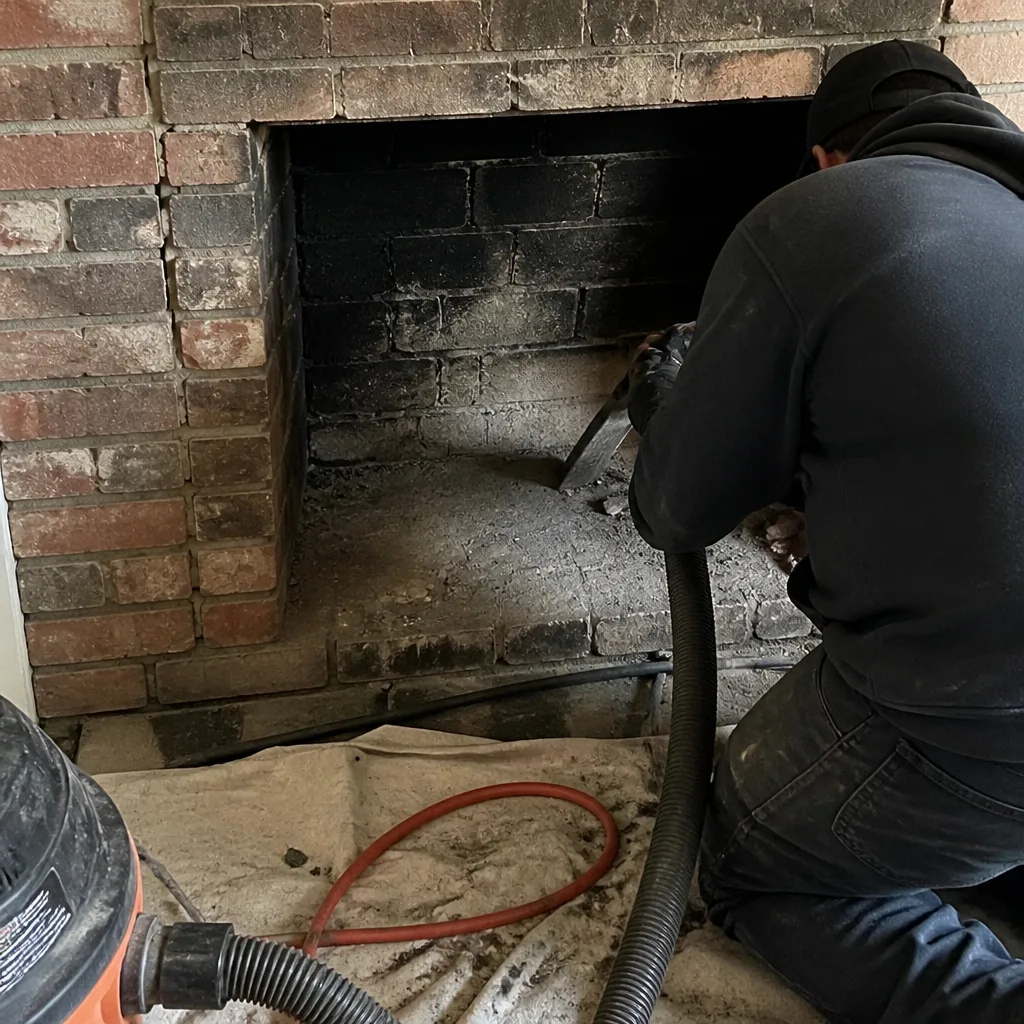 Before
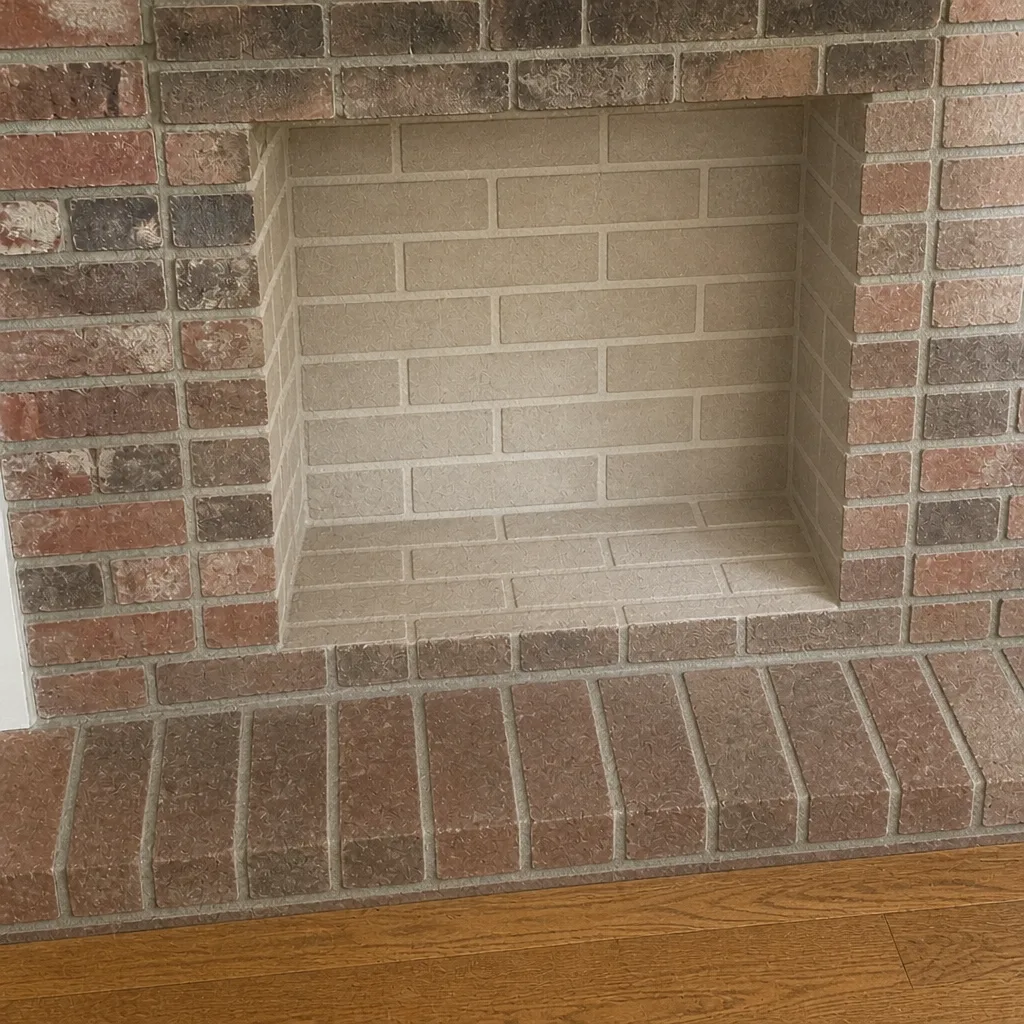 After
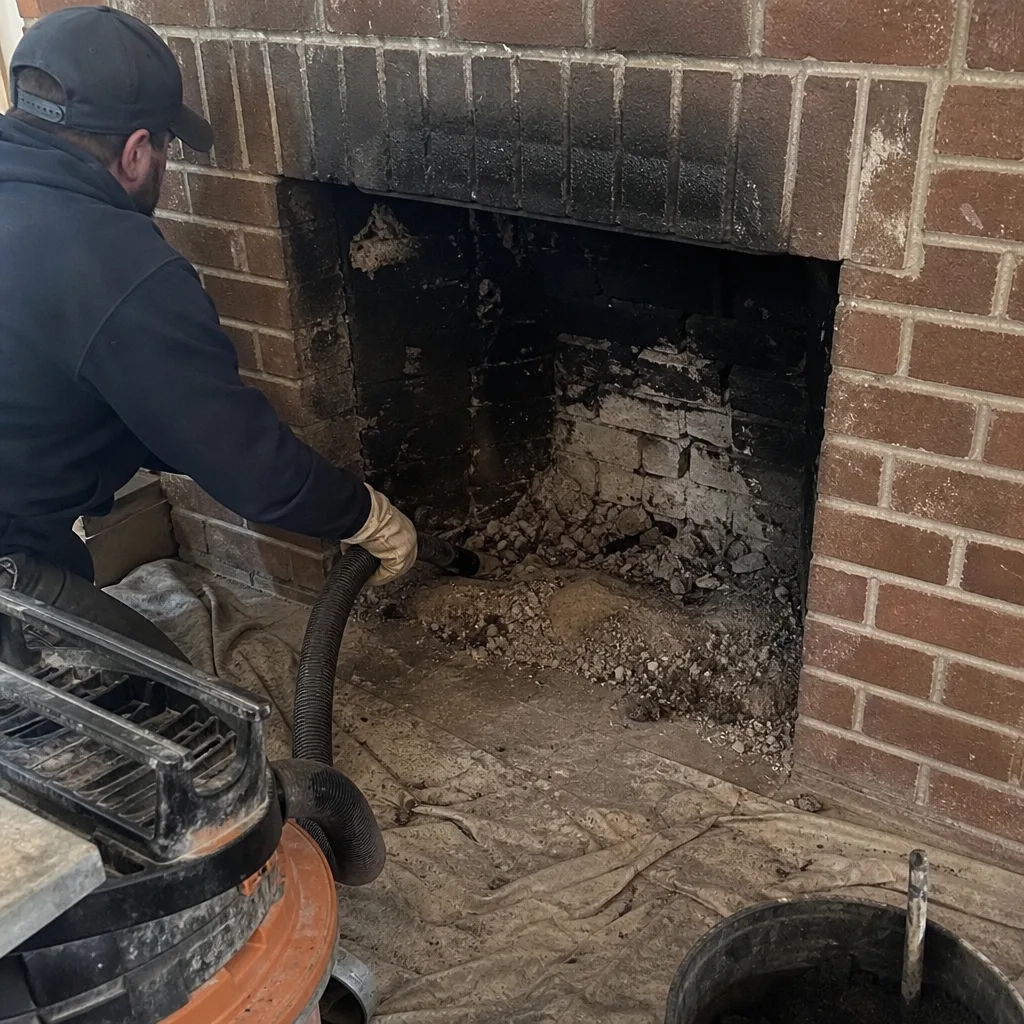 Before
 After
 Before
 After
Can You Fix Chimney Problems the Same Day?
Same-day work is often possible, and the schedule depends on what’s needed. A sweep and a camera inspection usually go together in one visit. A liner replacement or a resurfacing job is a booked appointment with the material on hand. Call (866) 947-9417 to book a time that works. We answer 24/7, and dispatch runs from 7am to 7pm, Sunday through Friday. If a call comes in outside dispatch hours, we book it into the next opening.
When to Call a Professional
Call a professional when you see smoke coming into the room, when you smell smoke after the fire is out, when a flue is glazed or you can see a tar-like film on the walls, when brick is spalling below the crown, or when you can’t tell why the fire is burning badly. Those are all signs the problem is structural or a matter of deposit stage that a cleaning alone won’t fix. Call sooner if you haven’t had the chimney inspected in a year or more, or if you’re not sure when it was last looked at. Chimney Sweep Wheat Ridge offers free estimates in Wheat Ridge. Call (866) 947-9417, and we’ll schedule a sweep and inspection together.
A working chimney that’s free of the problems in this guide still needs a routine sweep. For the basics, the parent page on chimney sweep services covers the routine picture, and this guide covers the troubleshooting layer. Both matter, and neither is a substitute for the other.
Frequently Asked Questions
Because the creosote that causes odor is often glazed third-degree creosote on the flue wall, and a standard rotary brush can’t remove it. The brush slides over the glazed layer and the smell stays. A camera inspection shows the film, and HeatShield ceramic resurfacing is the fix when the flue surface is the culprit. Call (866) 947-9417 for a free estimate, and we’ll confirm what’s actually in the flue before recommending anything.
Yes. At 5,440 feet, the thinner air reduces the weight difference that drives draft, so a flue that would work fine at sea level can be marginal in Wheat Ridge. That shows up as startup backdraft, a lazy fire, and smoke that lingers in the firebox. Warming the flue before lighting and checking the house pressure can help. A camera inspection tells you whether the flue itself is part of the problem. Call (866) 947-9417 to book one.
Not automatically. Thin surface flakes are usually cosmetic freeze-thaw damage on the brick face, and the fix is often a moisture barrier and crown repair rather than a rebuild. Chunks gone deep to the core with crumbling mortar joints are structural, and those need repointing. The difference is visible on inspection. Call (866) 947-9417 for a free estimate before agreeing to any rebuild.
Yes. A damper that doesn’t seat lets air leak past even when it looks closed, which causes cold drafts and hard-to-control fires. The gap isn’t visible from the firebox or the flue top; it shows up on a camera run. Damper repair is often a hinge or gasket fix rather than a full replacement. Call (866) 947-9417 to have it looked at, and we’ll show you the footage.
Once a year is a reasonable baseline for a chimney in regular use, and a sweep whenever the flue has a visible soot or creosote layer. In Wheat Ridge, the freeze-thaw cycle makes the exterior worth a look too, since spalling and crown cracks can develop between cleanings. If you can’t remember the last inspection, that’s the sign to book one. Call (866) 947-9417 for a free estimate.
Wind-driven smoke usually points to a pressure or termination problem rather than a dirty flue. The wind can create a downdraft at the flue top, especially if the cap or the chimney height isn’t handling it. A cap installed with Gelco or Famco components often improves the wind behavior. Get the flue and the cap looked at together. Call (866) 947-9417 to book an inspection.
The Bottom Line
Smoke, odor, and weak draw in a Wheat Ridge chimney come from a short list of causes, and most of them are diagnosable on a single visit with a camera. Separate the startup smoke from the sustained-burn smoke, check the deposit stage, and take the exterior seriously. That tells you whether you’re in cleaning territory or repair territory. We name the products we use, from DuraFlex liners to HeatShield resurfacing to Gelco and Famco caps and crowns, so the estimate tells you what goes into the chimney. One team handles the inspection, the diagnosis, and the repair.
Call (866) 947-9417 for a free estimate. We answer 24/7, with fast dispatch from 7am to 7pm, Sunday through Friday. One inspection, one team, everything from the firebox to the crown. A clean chimney is the starting point; a sound one is the goal.
Written by the team at Chimney Sweep Wheat Ridge.