
Last updated November 24, 2026
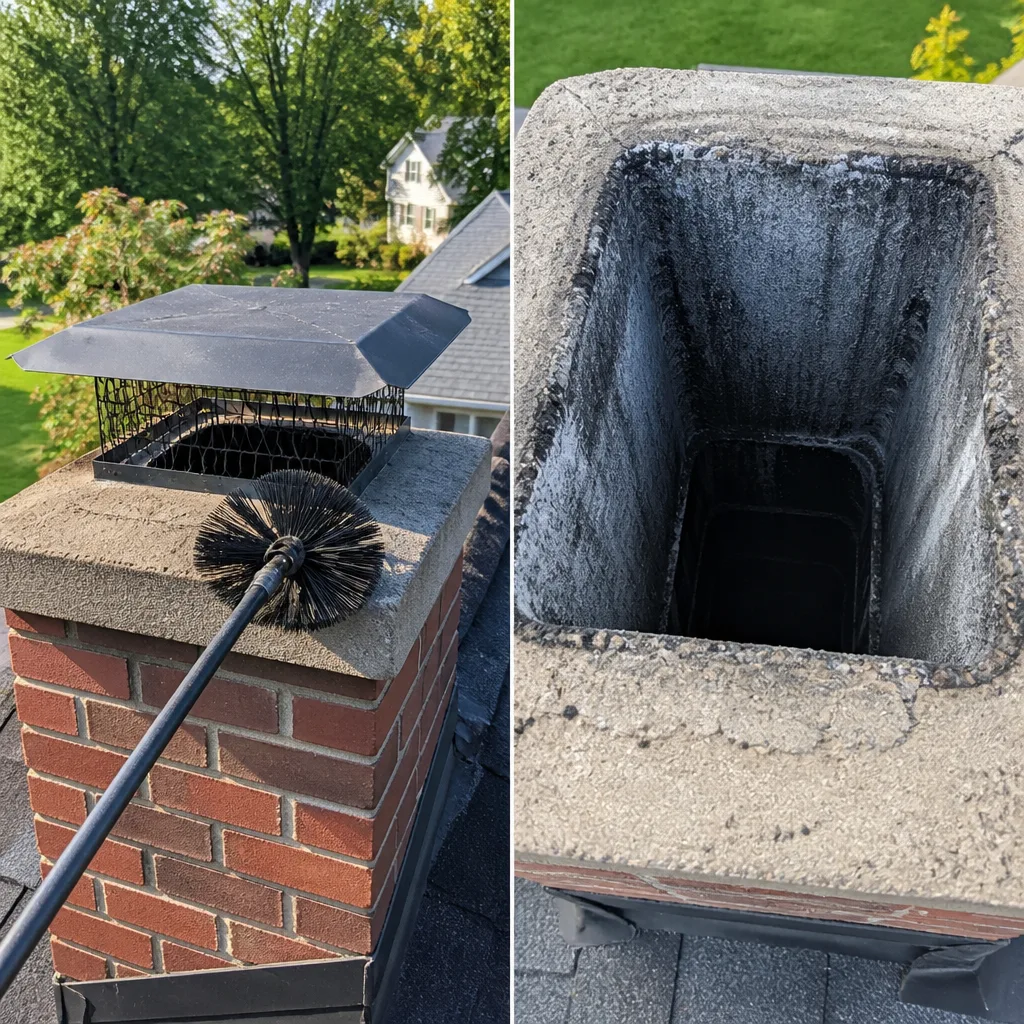 Sweep & inspection
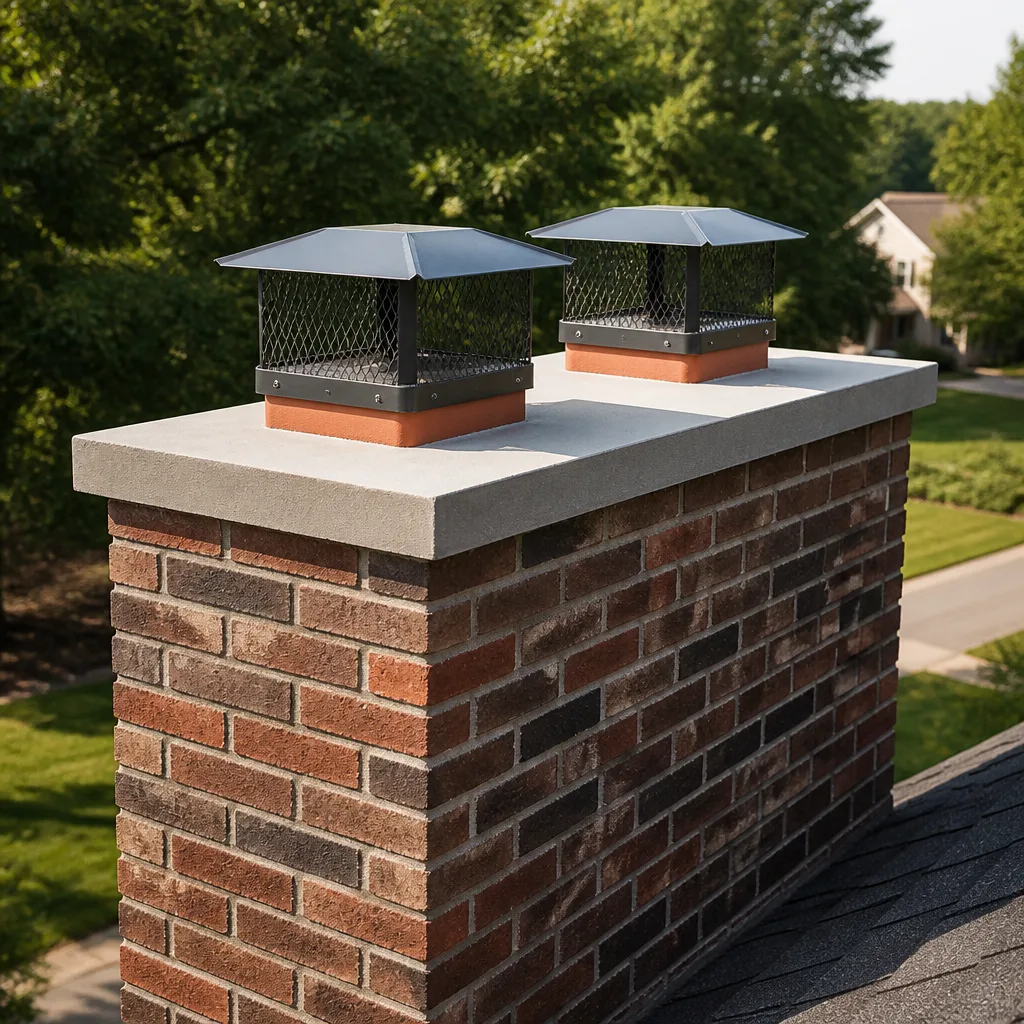 Caps & crowns
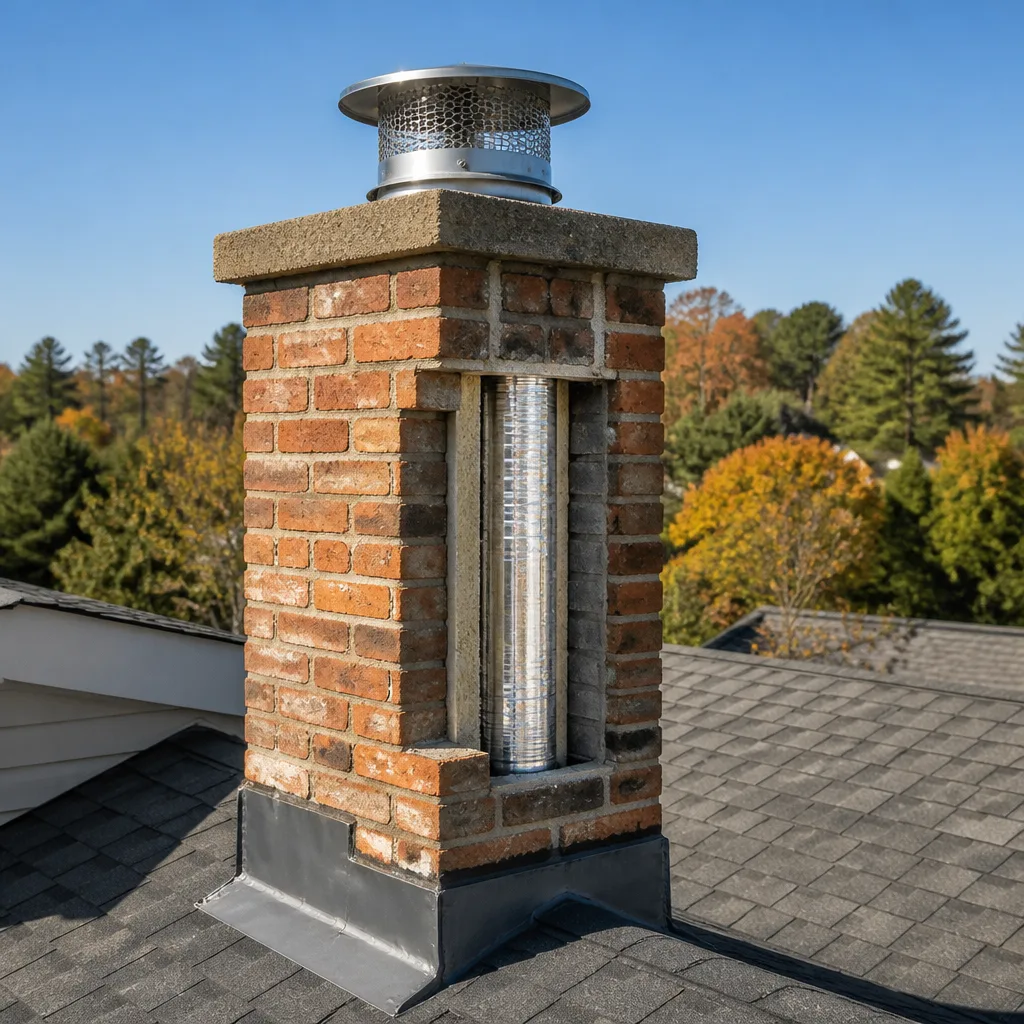 Flue relining
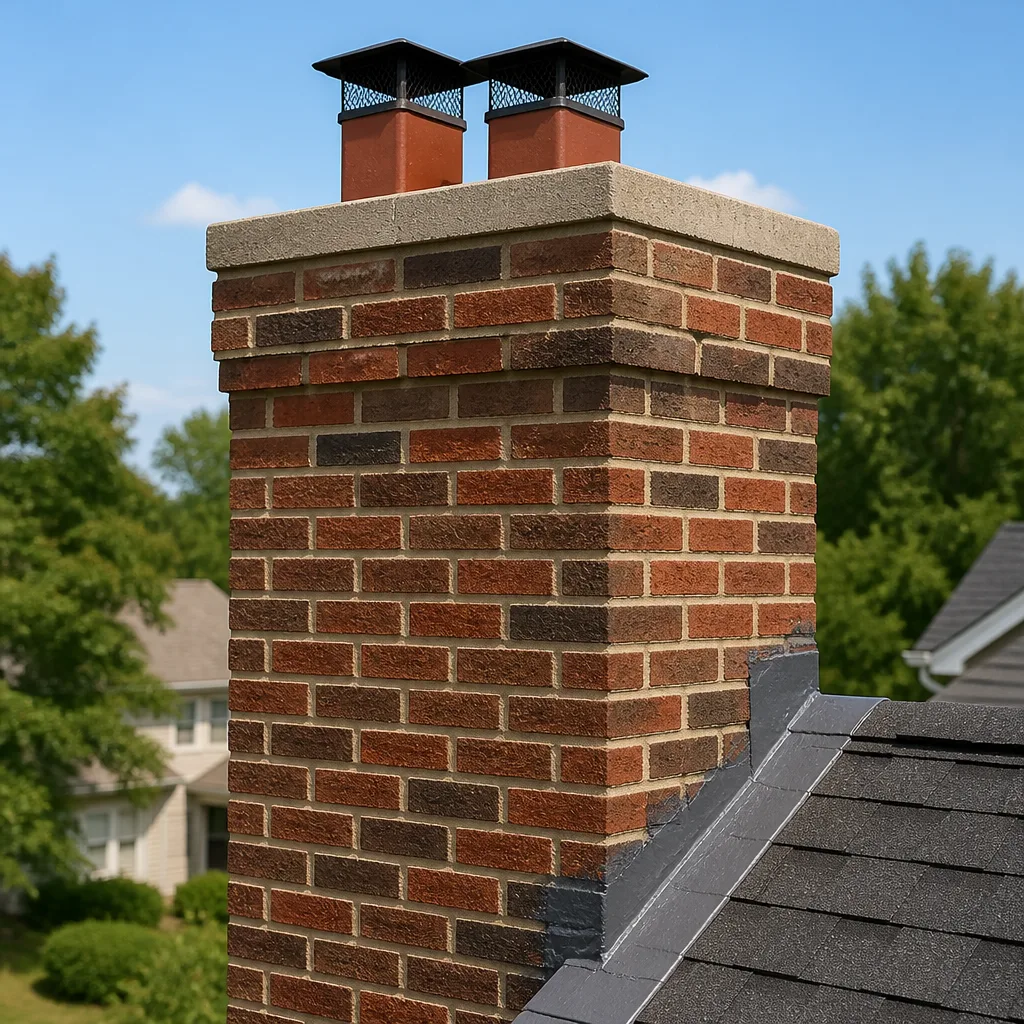 Masonry repair
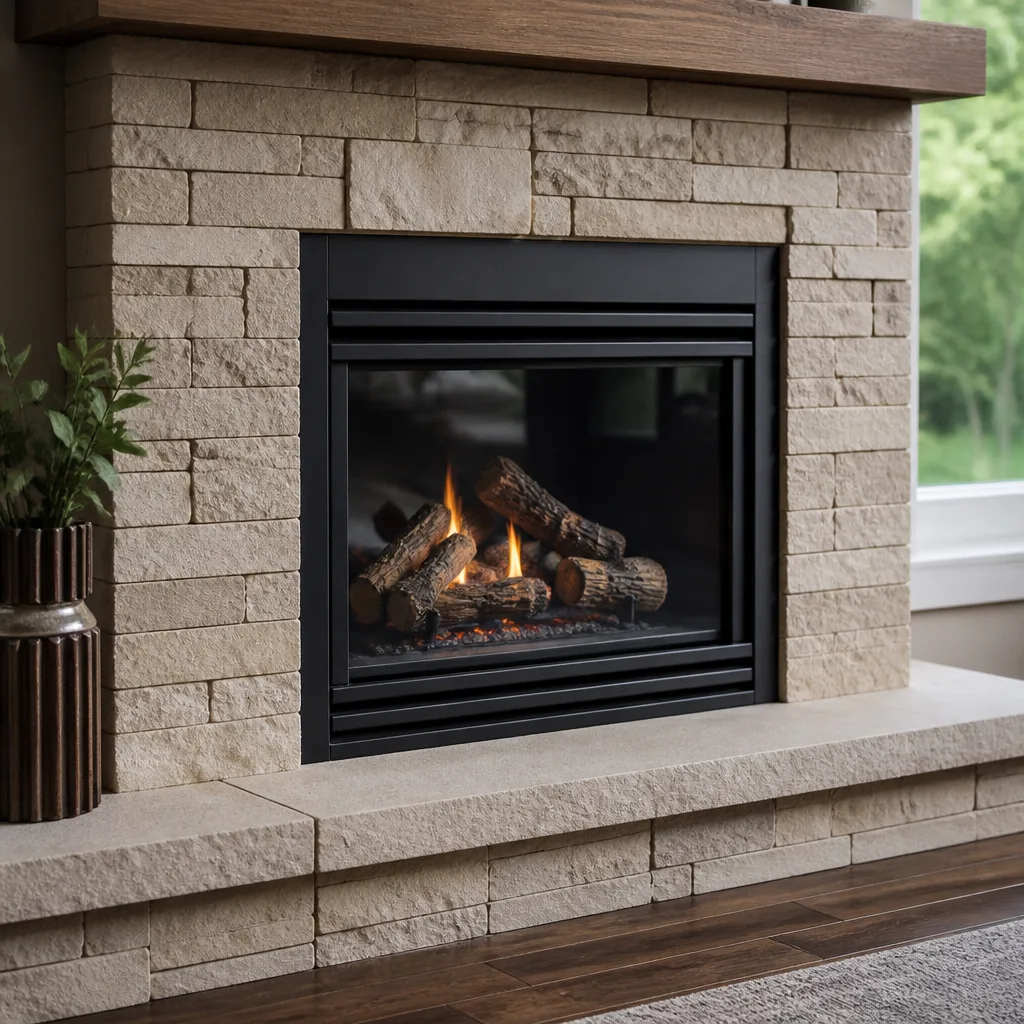 Gas fireplace service
Level 1 sweep and inspection to the NFPA 211 annual standard - flue, crown, cap, and flashing checked and photographed
Chimney sweep logs do not sweep chimneys. They loosen some creosote - which then falls where a brush and vacuum still have to collect it.
Seasonal Chimney Cleaning Care for Wheat Ridge: Year-Round Homeowner’s Guide
Most chimney guides treat the year as two seasons: get swept in fall, forget about it in spring. In Wheat Ridge, that advice misses the season that actually does the most damage. Spring is the worst time of year for crowns, mortar joints and flashing, not because of deep cold, but because of freeze-thaw cycling: late snowstorms roll in after warm weeks have opened the masonry, water gets in, and the refreeze pries it apart. Homeowners usually don’t look up there until October, by which point a hairline crack has had five months to grow. This guide maps chimney care to Wheat Ridge’s real four-season calendar, so you can inspect and service at the moment each problem starts rather than after it’s expensive.
Quick Answer
Chimney care in Wheat Ridge is best handled on a four-season cycle: service and sweep before the first fire in fall, check the cap and flue mid-winter during heavy use, inspect the crown, mortar joints and flashing in spring when freeze-thaw damage is most likely, and address moisture and chimney swifts in summer. A sweep and a camera inspection once a year, timed to your burning habits, is the baseline. Everything else on this list is an inspection point you can watch between visits.
Styles & brands we work with
- Sweep & inspection
- Caps & crowns
- Flue relining
- Masonry repair
- Gas fireplace service
Table of Contents
- Why Wheat Ridge Has Four Chimney Seasons, Not Two
- Fall: What to Inspect and Service Before the First Fire
- Winter: Mid-Season Checks for Heavy-Use Periods
- Spring: The Freeze-Thaw Damage Season Most Homeowners Skip
- Summer: Moisture Intrusion, Chimney Swifts and Wildlife Rules
- How to Build a Maintenance Calendar Around Shoulder Seasons
- Creosote 101: What the Three Stages Mean for Your Chimney
- Common Mistakes to Avoid
Why Wheat Ridge Has Four Chimney Seasons, Not Two
Wheat Ridge sits on the eastern edge of the Front Range, which means it gets both the plains weather and the foothills weather, sometimes in the same week. Late snowstorms in April and early May are normal here. So is a run of warm, dry days in February. That swing between thawing and refreezing is what stresses masonry, and it happens in shoulder seasons more than at the coldest point of the year.
A typical four-season calendar for a Wheat Ridge chimney looks like this:
- Fall: full sweep, camera inspection, damper and cap check before the burning season starts.
- Winter: watch creosote buildup patterns, check the cap for snow and ice, verify draft during cold snaps.
- Spring: inspect crown, mortar joints and flashing after the last freeze-thaw cycle.
- Summer: watch for moisture intrusion and chimney swifts, and schedule any masonry work in the dry months.
The reason this matters is that each season has a different failure mode. A crown crack that starts in spring is a small repair. Left until fall, it becomes a water path into the flue and a bigger masonry problem. Mapping tasks to the seasons means you’re fixing things when they’re still small.
Fall: What to Inspect and Service Before the First Fire
Fall is the season most Wheat Ridge homeowners already pay attention to, and that’s fair, because it’s the right time to set the chimney up for the months it will actually be used. What most fall checklists miss is that the chimney has been sitting idle through summer, and sitting idle has its own effects.
Here’s what a proper pre-season service should cover:
- Sweep the flue and firebox. A professional chimney sweep removes soot and glazed deposits that built up during last winter and settled during the summer.
- Classify the creosote. Stage 1 is light and brushable. Stage 2 is denser and needs more than a standard brush. Stage 3 is glazed and hard, and it’s the stage that most contributes to chimney fire risk. The sweep should tell you which stage you’re at, not just “it was dirty.”
- Check the damper. It should open and close fully and seat properly. A damper that sticks open in summer lets warm moist air into the flue, which is one of the reasons summer odor problems happen.
- Inspect the cap. A missing or damaged cap lets rain, snow and birds straight into the flue. Caps are one of the least expensive parts of the system to replace, and one of the highest-value.
- Camera the interior. A video scan of the flue catches cracked tiles, gaps in the liner, and offsets that a visual check from the top won’t reveal.
We specify caps and crowns by name (Gelco and Famco components, for example) so you know exactly what hardware is going onto your chimney rather than an anonymous off-brand cap. That’s a small thing that matters when you’re trusting the cap to keep weather and wildlife out for the next decade.
Winter: Mid-Season Checks for Heavy-Use Periods
Winter is when a Wheat Ridge chimney does the most work. It’s also the season where a homeowner’s burning habits shape what the inside of the flue looks like by March. A few mid-season checks go a long way.
Watch your burning patterns. Cold snaps in Wheat Ridge often mean long, slow burns with a damped-down fire, which is comfortable but is also exactly the condition that accelerates Stage 2 creosote. Smoldering fires produce more unburned wood gas, which condenses in a cooler flue. Hotter, shorter burns with dry, seasoned wood produce less of it. The tradeoff is real, and worth knowing before you decide the wood is fine to burn because it’s dry to the touch.
Check the cap and top of the chimney after storms. Snow and ice can sit on a cap for days. If you can see the chimney safely from the ground, look for ice dams or snow accumulation that isn’t melting at the same rate as the rest of the roof.
Notice changes in draft. A fire that smokes back into the room when it didn’t last year is a draft problem, not a firewood problem. A partially blocked flue, a damaged cap screen or a creosote-clogged flue can all reduce draft. Don’t put a fire in it until it’s been looked at.
Listen. A low roar or a sound like a distant train from inside the chimney is not normal. If you hear it, get out and call the fire department. Chimney fires in Wheat Ridge can burn hot enough to damage the flue lining without anyone on the ground knowing they’ve happened, which is why the camera inspection in fall and again in spring matters.
Spring: The Freeze-Thaw Damage Season Most Homeowners Skip
This is the part of the annual cycle Wheat Ridge homeowners most often ignore, and it’s the one that costs the most. Spring is when the masonry gets stress-tested by temperatures swinging above and below freezing day after day. Water that got into a hairline crack over the winter expands when it refreezes, and the crack grows.
The three areas to inspect in spring are:
- The crown. The concrete cap on top of the chimney should slope away from the flue and be free of cracks. A crown that’s flat or has hairline cracks lets water pool and wick down into the masonry. A small crown crack repaired in spring is a small repair. Left until fall, it’s often a masonry job.
- Mortar joints. Look for missing mortar, receding joints, or white staining that suggests efflorescence (salts pushed out of the masonry by moisture). Joints that are failing in spring are usually failing faster than they look.
- Flashing. The metal where the chimney meets the roof is the most common source of roof leaks around a chimney. Spring is when the freeze-thaw cycle does the most damage to the flashing seals and the step flashing itself.
If you find damage in spring, do the repair then. Dry, warm months are the right time for masonry work on a chimney, because mortar needs to cure without the freeze-thaw cycle working against it. Chimney repair in summer is a much easier job than the same repair in a cold snap.
Summer: Moisture Intrusion, Chimney Swifts and Wildlife Rules
Summer is when the chimney isn’t doing anything, which is precisely why it’s worth looking at. Two problems dominate the Wheat Ridge summer chimney list.
Moisture intrusion. A chimney that sits all summer without a fire is a chimney that stays cool. Cool masonry draws moisture from humid air, and if the cap is missing or the crown is cracked, rain gets in on top of it. The result is that musty chimney smell that some homeowners notice in August. The fix is a cap that seals properly (Gelco and Famco make quality caps and venting components), a crown that slopes correctly, and a flue that stays dry.
Chimney swifts. These small birds nest in chimneys across Colorado, and they’re protected under federal law. You cannot remove an active nest, and you shouldn’t try to. The practical approach is:
- Schedule the sweep and cap installation before the swifts return in spring, or after they leave in fall.
- If swifts are already nesting, leave the nest alone until the young have fledged. It’s a short nesting period, and disturbing it is both illegal and ineffective.
- Install a proper cap with a screen so the chimney isn’t available to swifts and other birds next year.
In practice, this means the smart time to cap a chimney is late fall or very early spring, when nothing is using it. If you’re not sure whether a chimney has an active nest, ask before you schedule.
How to Build a Maintenance Calendar Around Shoulder Seasons
The single biggest improvement most homeowners can make to their chimney care is to stop scheduling by fixed dates and start scheduling by conditions. A calendar that says “sweep in September” is worse than a calendar that says “sweep when the burning season is about to start and the last freeze is past.”
Here’s a flexible framework for Wheat Ridge:
- Late August to early October: full sweep, camera inspection, and any needed repairs before the first fire. This is the single most important appointment on the calendar.
- December to February: watch burning patterns and check the cap after storms. No service appointment is required unless you notice draft problems or smoke backing up.
- Mid-April to mid-May: inspect crown, mortar joints and flashing. If you find damage, book the repair for the next dry stretch.
- June to August: moisture check, swift nest check, and any masonry work. This is also the season to install or replace caps.
The shoulder seasons in Wheat Ridge can shift by weeks, so plan around actual conditions. A late snow in early May should push your spring inspection back a few weeks, not cancel it. A warm March that starts the thaw early should move it up. This is the same reasoning behind scheduling a Chimney Sweep in Wheat Ridge when the forecast is stable rather than during a snowstorm.
Creosote 101: What the Three Stages Mean for Your Chimney
Creosote is the material that forms when wood smoke condenses on the inside of a flue. It’s the number one reason chimney sweeps care about the inside of the chimney, and it comes in three stages. Most homeowners don’t know which one they’re dealing with until someone looks.
- Stage 1: light, flaky, brushable soot. This is the normal result of routine burning. A standard sweep removes it.
- Stage 2: denser, sometimes sticky or tar-like, and harder to remove than Stage 1. It often builds in cooler flues, in damped-down fires, or in wood that’s a bit too damp. A standard brush doesn’t always remove it fully.
- Stage 3: glazed, hard, and often looks like black glass. This is the stage most associated with chimney fire risk, and it usually takes more than sweeping to resolve.
In Wheat Ridge, the pattern we see most often is that Stage 2 creosote is accelerated by long, damped-down burns during the coldest snap of winter. The temperature isn’t the problem. The problem is the burn pattern combined with wood that could be drier. Dry, seasoned wood and a hot fire are the two things a homeowner has the most control over. A chimney sweep can tell you which stage you’re at and whether a specialty cleaning is needed.
Common Mistakes to Avoid
- Waiting until fall to look at the chimney. Fall is when you’ll actually need the chimney, and if a repair is needed, you’ll be scheduling it at the busiest time of year. A spring inspection finds the same damage months earlier.
- Skipping the spring crown and flashing inspection. This is the single biggest gap in most Wheat Ridge homeowners’ annual chimney routine. The freeze-thaw cycle does its worst damage in spring, and it’s the season most often skipped.
- Assuming a “chimney cleaning” means a full service. A sweep and an inspection are two different services. A sweep removes what’s in the flue. An inspection looks for the things that will cause a problem later (cracked tiles, damaged cap, failing flashing). Ask for both.
- Burning wet or unseasoned wood to save money. The savings on cheap wood are often wiped out by the creosote buildup it causes. Dry wood is the cheap path in the long run.
- Removing a chimney swift nest. It’s protected wildlife, and disturbing an active nest is illegal. Cap the chimney before or after nest season, never during.
- Using an off-brand cap to save a few dollars. A named cap (Gelco, Famco, Olympia Chimney are among the ones we spec) lasts longer and fits properly. An ill-fitting off-brand cap is often the reason a chimney still gets water intrusion after it’s been “capped.”
- Ignoring a change in draft. A fire that smokes back into the room is a warning sign, not a quirk. Get it looked at before the next burn.
See the difference
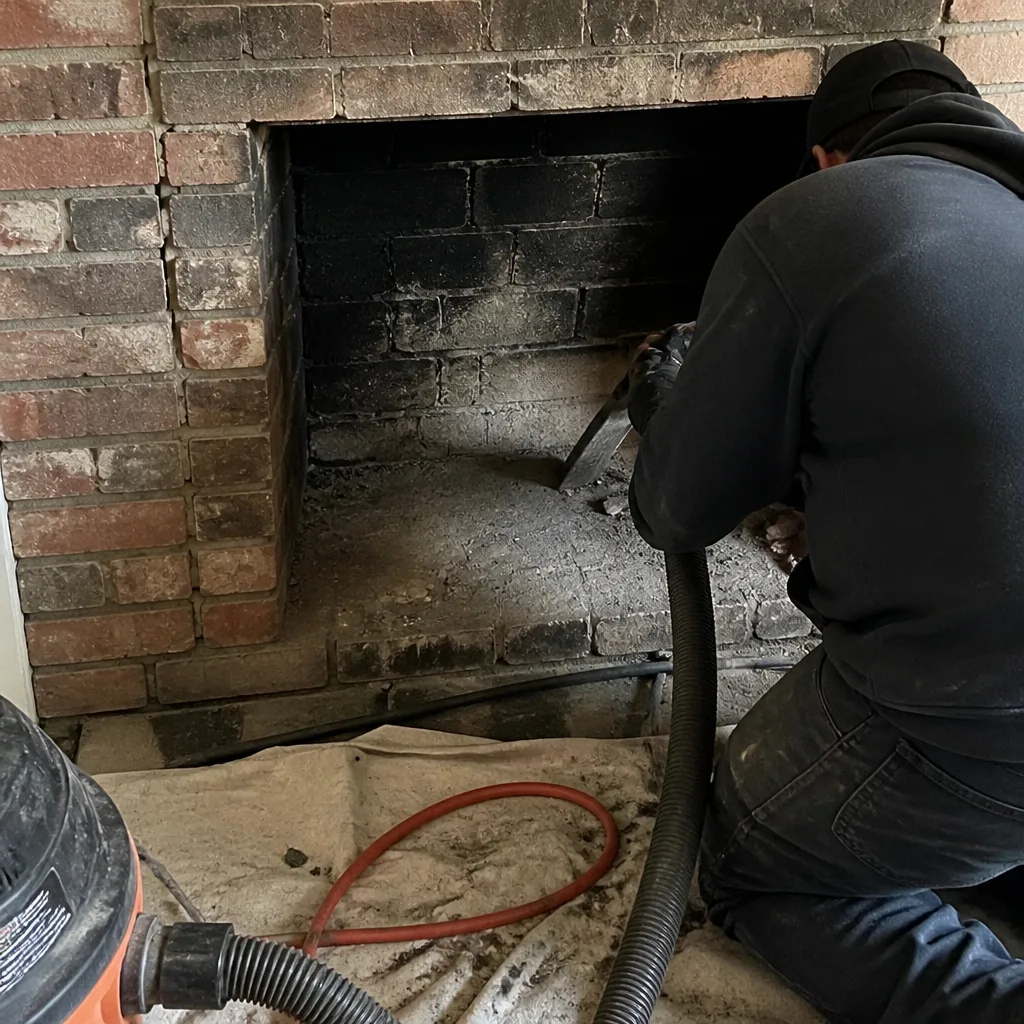 Before
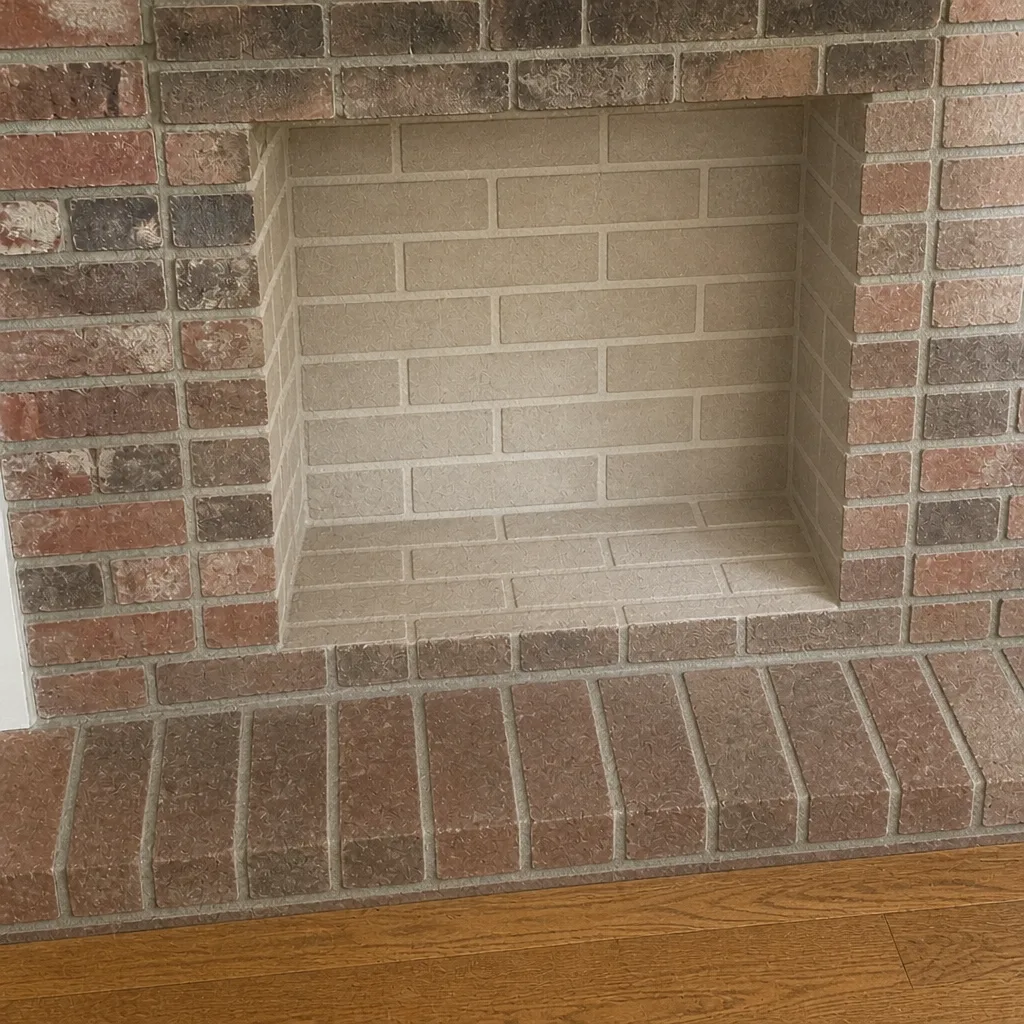 After
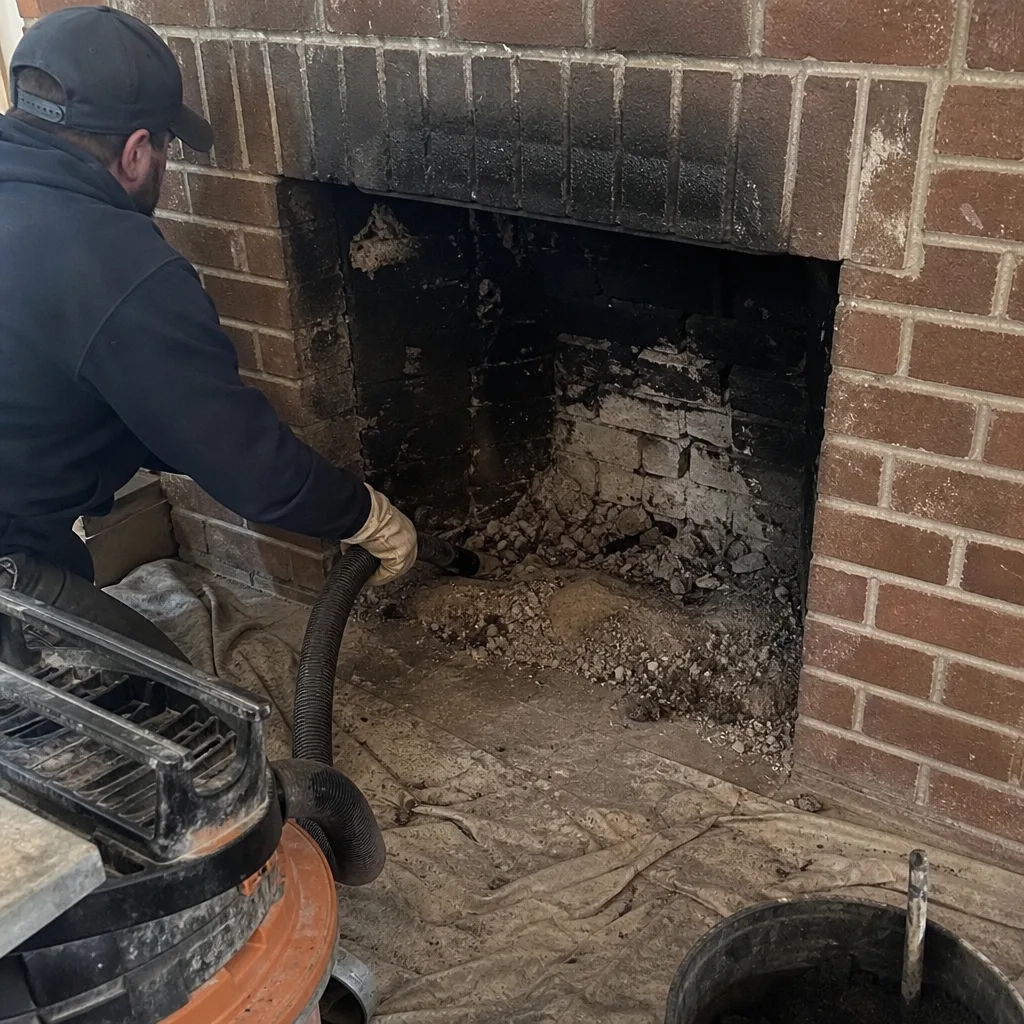 Before
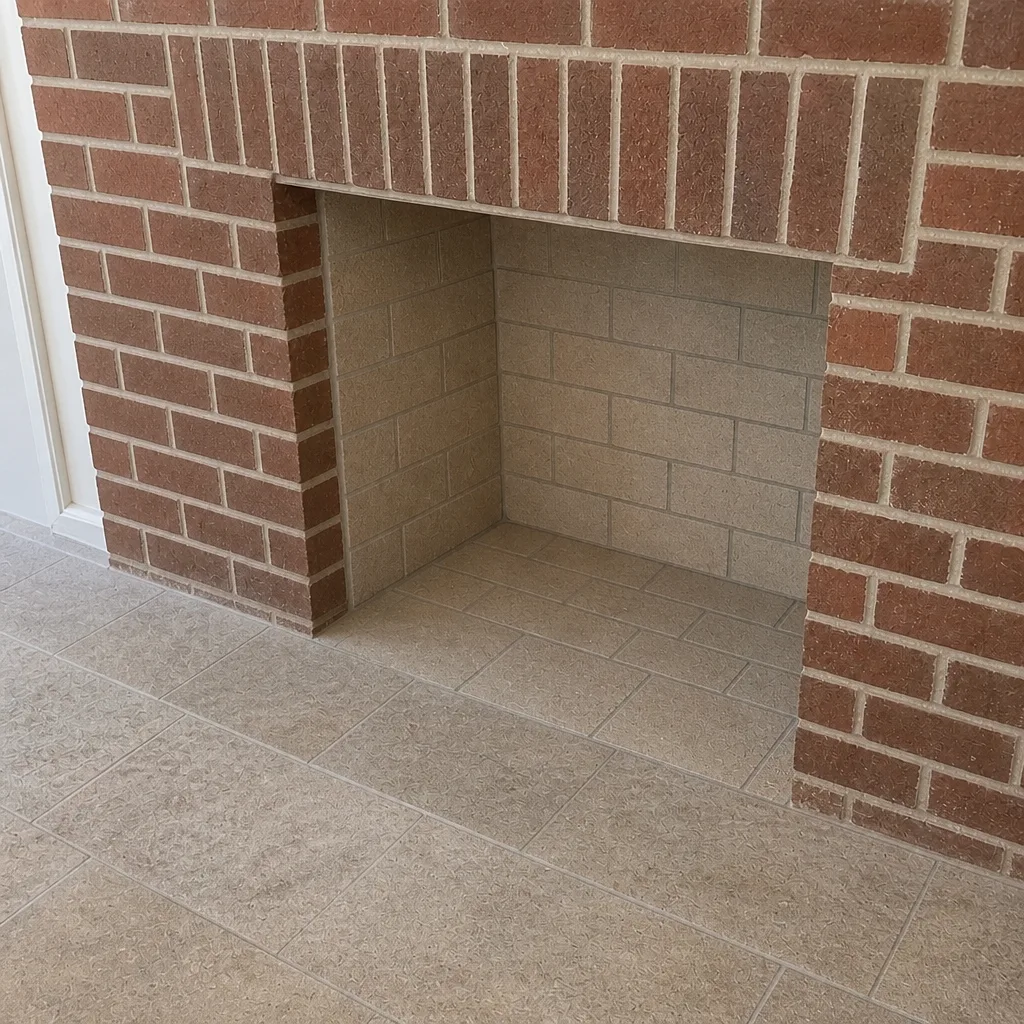 After
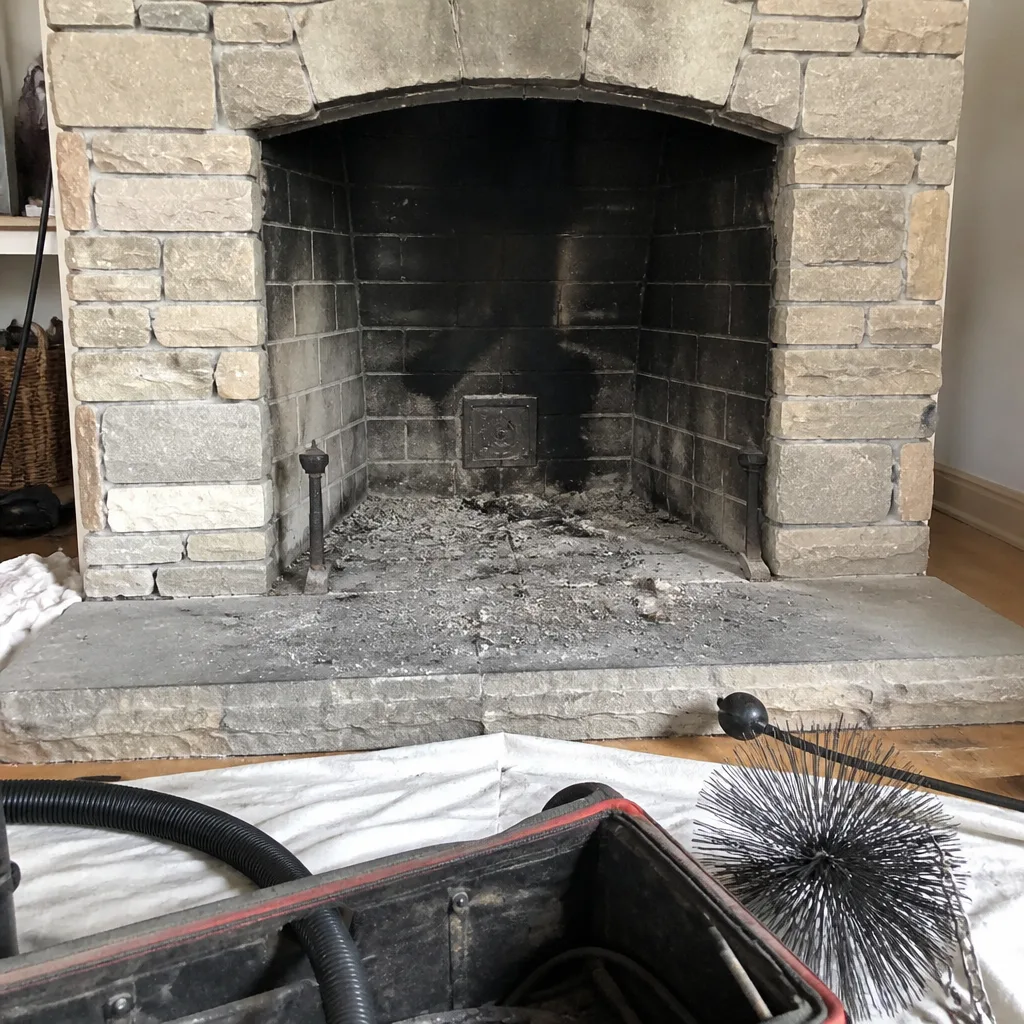 Before
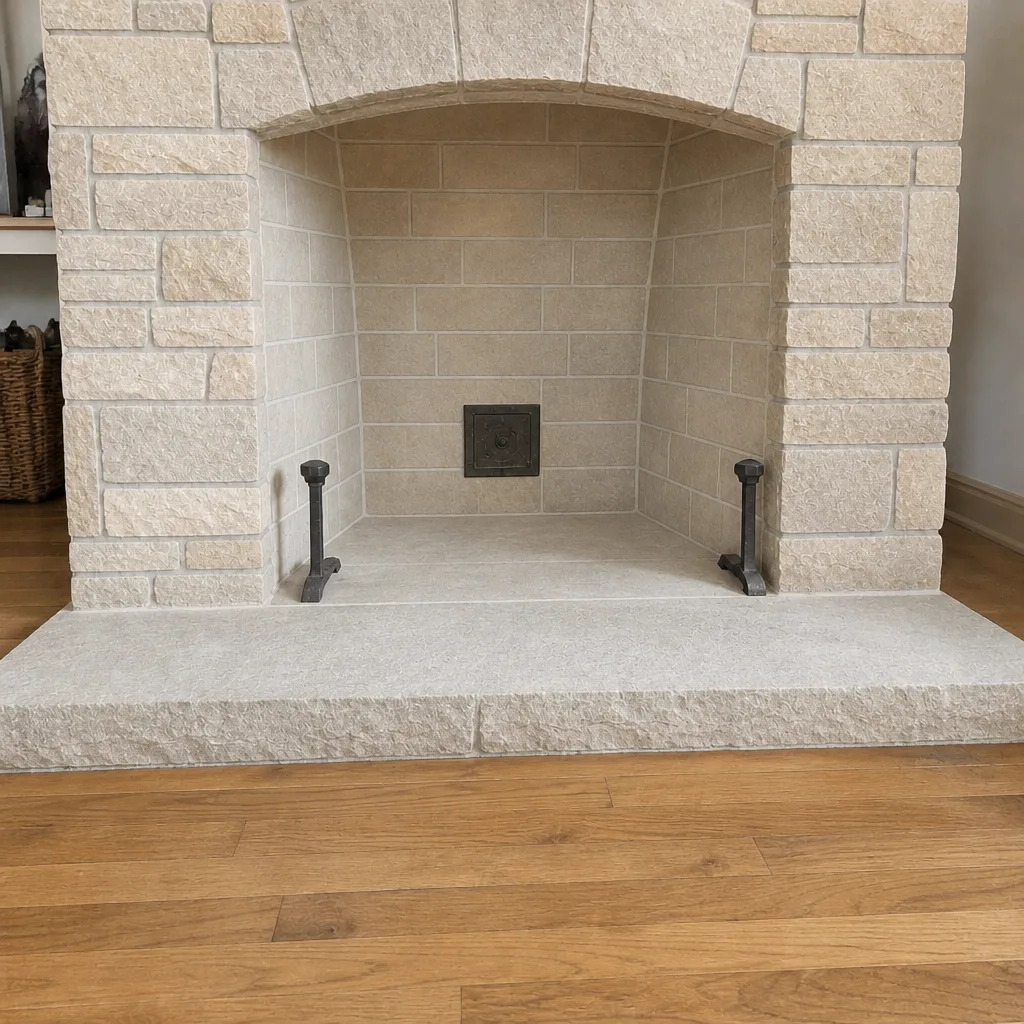 After
When to Call a Professional
Some chimney care is routine, but there are specific situations where you should have a trained technician look at the chimney before you use it again. If you’ve never had the flue camera-inspected and you don’t know the state of the lining, that’s a starting appointment. If a fire has smoked back into the room, that’s a call. If you can see cracked mortar, a missing crown or damaged flashing from the ground, that’s a call. If the last sweep told you that you were at Stage 2 or Stage 3 creosote, that’s a call. If a chimney fire has ever happened (even one you think was small), that’s a call before any further burning. Chimney Sweep Wheat Ridge offers free estimates in Wheat Ridge, and work on both the fireplace and the chimney structure can be scheduled through one team. Call (866) 947-9417.
Frequently Asked Questions
Once a year for most households that burn regularly through the winter, and more often if you burn a lot or have had creosote issues. The right time for most Wheat Ridge homeowners is just before the burning season, once the summer is definitely over and the first fire is a few weeks away. If your burning habits change (more wood, wetter wood, longer burns), tell the sweep, because that affects the interval. Call (866) 947-9417 to schedule a free estimate.
Yes, because the things you’re looking for in spring are different from the things you’re looking for in fall. Fall is about the flue and what’s inside it. Spring is about the masonry, crown and flashing, which are stressed by the freeze-thaw cycle that runs into April and early May in Wheat Ridge. A spring walk-around is a visual check, not a full sweep, and it’s the cheapest insurance on the house. Call (866) 947-9417 for an estimate on a spring inspection.
Chimney swifts are small birds that nest in chimneys across Colorado, and they’re protected under federal law, so you can’t remove an active nest. The practical answer is to cap the chimney outside nesting season, before the swifts return or after they’ve left. If you’re not sure whether a nest is active, don’t guess; ask before scheduling any chimney work. We can handle the cap and the venting installation when the timing is right. Call (866) 947-9417.
It’s both. Stage 1 creosote is a routine maintenance issue. Stage 3, the glazed kind, is the stage most associated with chimney fire risk, and a chimney fire can damage the flue lining without anyone on the ground knowing it happened. That’s why the camera inspection matters, and why we tell you which stage you’re at rather than just cleaning and leaving. Call (866) 947-9417 to book a sweep and inspection.
Yes. Crown and flashing repair is part of chimney repair, and it’s exactly the kind of thing a spring inspection is meant to catch. If the crown needs replacing, we specify the components by name (Gelco and Famco among them), so you know what’s actually going onto the chimney. That’s a specific part of the work we do, not an afterthought. Call (866) 947-9417 for a free estimate.
One team handles the sweep, the inspection, fireplace repair, chimney repair, and cap and crown work. That means if the inspection turns up a problem in the firebox and a problem at the crown, you’re not coordinating two different contractors and figuring out whose scope a repair falls in. The same team that looks at it fixes it. Call (866) 947-9417 to schedule.
The Bottom Line
Wheat Ridge chimneys are best cared for on a four-season calendar, not a two-season one. Fall is the sweep and inspection before the burning season. Winter is the mid-season check on burning patterns and draft. Spring is the freeze-thaw inspection on crown, mortar and flashing, and it’s the season most homeowners skip. Summer is the moisture and swift check, which is also the right time for masonry work. Set your appointments around the weather, not fixed dates, and the rest takes care of itself. A clean chimney is the starting point; a sound one is the goal, and it takes care through the whole year to keep it that way.
Written by the team at Chimney Sweep Wheat Ridge.
If the seasonal calendar above is more than you want to track yourself, that’s what we’re for. We handle the sweep, the inspection, and any repair that comes out of either, so you’re not lining up contractors. Call (866) 947-9417 for a free estimate. We answer 24/7. Fast dispatch from 7am to 7pm, Sunday through Friday.