
Top Signs You Need Chimney Cleaning Service – Don’t Ignore These
A fireplace that draws well and smells clean can still be hiding a flue coated in stage-two creosote, one hot fire away from ignition. Most homeowners wait for smoke backing into the room or a heavy odor before they book anything. By then the cheapest window for a sweep has already closed. The warning signs that matter most are usually quiet: a faint glaze you can’t see from the firebox, a white bloom on the brick outside, a draft that feels a little lazy. If you’d rather not climb a roof or guess at what’s inside the flue, call (866) 947-9417 for a free estimate.
Key Takeaways
- Third-degree glazed creosote produces almost no visible warning inside the firebox, so a clean-looking fire matters less than what a technician finds with a camera.
- White staining on exterior brick is a chimney cleaning signal, not a cosmetic problem: it means water is moving through the masonry.
- Reduced draft that feels like wet wood is often a creosote or cap obstruction a sweep resolves.
- Five ground-level checks after winter tell a Wheat Ridge homeowner whether to book.
What are the real signs you need chimney cleaning service?
The reliable signs fall into three groups: what you smell, what you hear, and what you can see from the ground. Smell and sound are the homeowner-detectable signals. The most dangerous condition, glazed creosote, is not. That’s the gap most people miss.
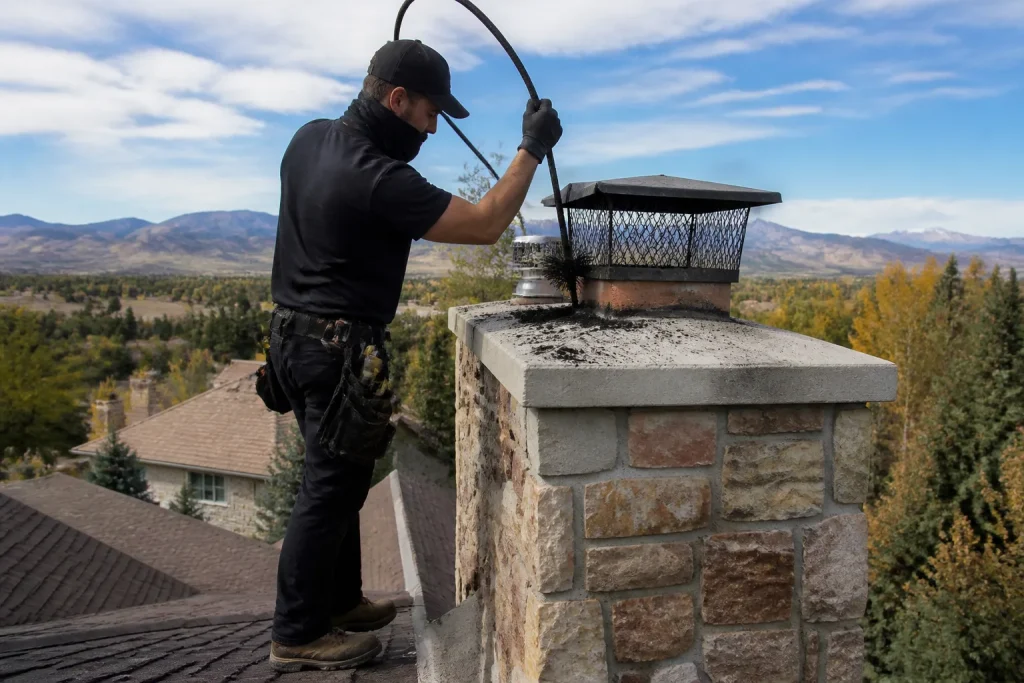
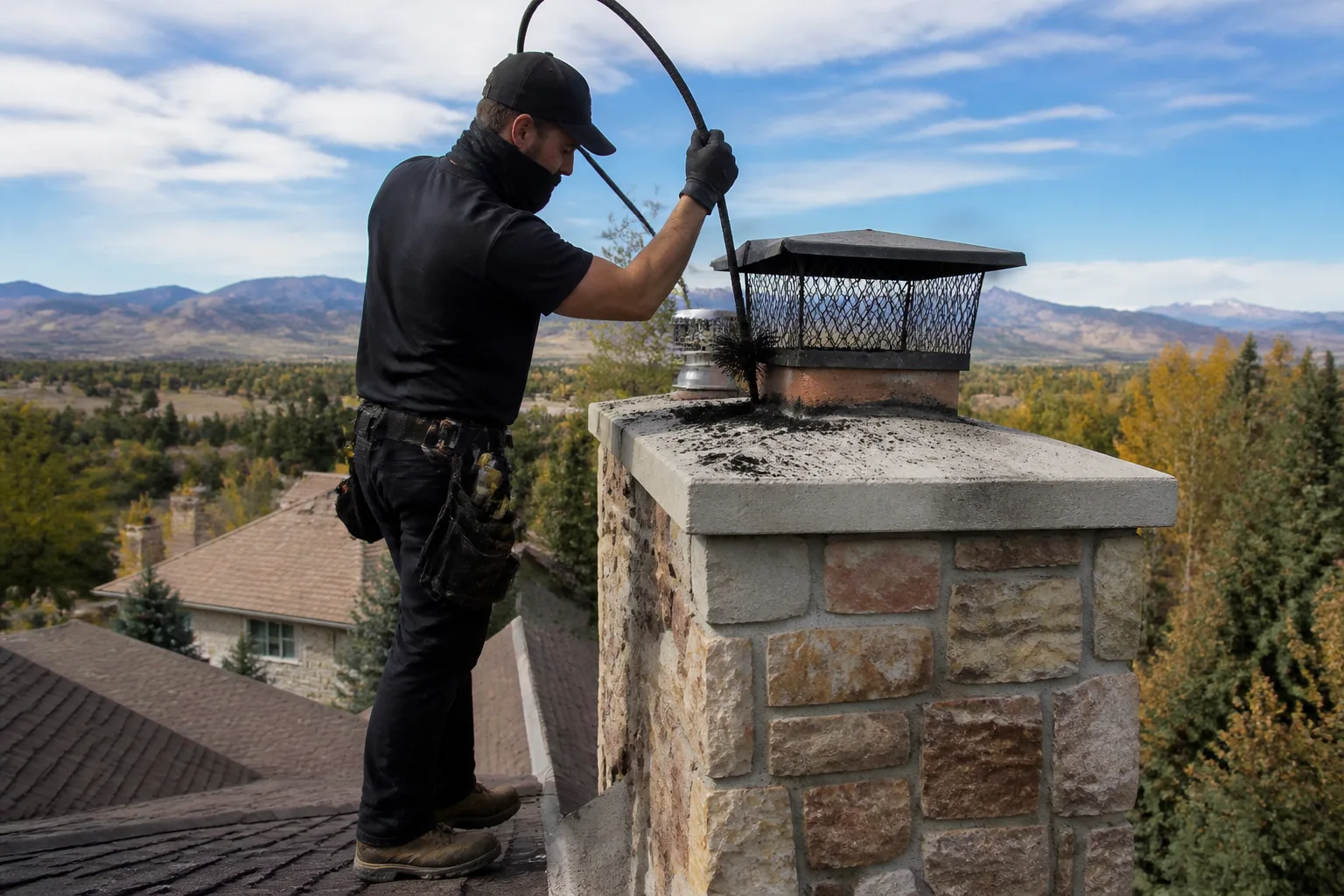
Here’s what a chimney sweep is actually looking for when they arrive in Wheat Ridge:
- Creosote buildup beyond a thin dusting. A light, flaky layer is normal after a season of burning. A thick, tar-like coating is not, and it changes how the flue gets cleaned.
- A blocked or damaged cap. Caps keep rain, birds, and debris out. When one fails, everything above comes down the flue.
- Efflorescence on exterior brick. That white, chalky staining isn’t dirt. It’s salts left behind as water moves through the masonry, and it points to a moisture problem a sweep and inspection can trace.
- Smoke rolling back into the room. A sign the flue isn’t pulling, whether from creosote, a blockage, or a cap that’s closed off the draw.
- A burned or musty smell even when there’s no fire. Lingering odor usually means deposit buildup or something lodged in the flue.
None of these require a panic call. All of them reward a booked sweep before the next burning season, when the flue gets a real inspection instead of a guess. Our technicians have up to 8 years of experience reading exactly these signals, and we specify the product by name so you know what’s going into your chimney.
The three creosote stages, and which one you can actually see
Creosote forms in three stages, and only the first is easy for a homeowner to recognize. Stage one is a light, sooty fluff you can brush away easily. Stage two is a crusty, flaky deposit that’s harder to remove and shows up on flue walls after repeated burns. Stage three is glazed creosote: a hard, shiny, tar-like shell that bonds to the flue and is the most hazardous form. It’s also the one that hides.
From the firebox, stage three often looks like nothing. The fire draws, the smoke rises, the inside of the firebox looks clean. A technician using a camera or a mirror on a rod sees what the firebox view hides, and that’s the whole reason an inspection is more than a visual glance. Glazed creosote doesn’t respond to a standard sweep brush the way lighter deposits do, which is why the right fix may involve specialized tools or, in some cases, HeatShield ceramic resurfacing to restore a damaged flue interior. Most chimney companies don’t offer that repair at all. We do, and we treat it as a repair, not an upsell.
The takeaway is simple: you can’t diagnose your own flue by looking up from the hearth. Stage one is visible, stage two is detectable with a careful sweep, and stage three is what a camera catches before it becomes a fire risk. That’s the inspection window most homeowners miss, and it’s the one worth protecting in Wheat Ridge.
Why white staining on exterior brick means the chimney needs attention
Efflorescence, that chalky white bloom on exterior brick, is a moisture signal, not a stain to scrub off. Water is getting into the masonry, dissolving salts, and pushing them to the surface as it dries. Left alone, that same water cycle damages mortar, the crown, and eventually the flue liner.
When we see efflorescence on a Wheat Ridge chimney, we look for the source: a cracked crown, a missing or loose cap, failed flashing at the roofline, or a liner that’s letting moisture through. The fix isn’t always a big job. A new cap using Famco or Gelco components, a crown repair, or a DuraFlex liner system where the old flue has failed can resolve it, and each of those products is one we source by name so you know exactly what’s being installed.
This is where homeowners often feel stuck. Someone tells them they need masonry work and they have no way to check. Our answer is simple: nothing is recommended without camera evidence you can see for yourself, and we’ll tell you plainly when a repair can safely wait. A white stain alone is a reason to inspect, not a reason to spend. In Wheat Ridge, where the freeze-thaw cycle works on masonry all winter, catching efflorescence early usually means the difference between a cap and a rebuild.
Animal, debris, or collapsed liner: how to tell the blockage apart
The sound and smell of a blockage tell a technician a lot before a camera goes in, and homeowners can pick up on the same clues.
- Animal blockage: scratching, fluttering, or chirping from the flue, often with a sour or ammonia-like smell. Birds, squirrels, and raccoons favor an uncapped chimney because it looks like a hollow tree.
- Debris blockage: leaves, twigs, and nesting material create a dull, muffled smell and a draft that fades the more you burn. No scratching, just a flue that won’t pull.
- Collapsed liner section: a deeper, heavier rattle when the flue is disturbed, sometimes a chunk of tile or metal found in the firebox, and a dramatic loss of draft. This is a repair, not a cleaning, and it’s why we carry DuraFlex liner systems and Olympia Chimney components.
Sound and smell get you close, but a camera inspection confirms it. Once we know what’s in there, the sweep and the repair become one job instead of two. That single-source accountability matters: one company owns the inspection, the diagnosis, and the fix, so nothing gets lost between contractors.
When reduced draft isn’t the wood or the weather
A lazy fire gets blamed on wet wood or a humid day more than anything else. Sometimes that’s right. Often it isn’t. Reduced draft is frequently a creosote or cap obstruction that a standard cleaning resolves, and it’s one of the most common reasons a chimney sweep finds a real problem behind what felt like a fuel issue.
Here’s how to tell the difference. Wet wood smolders and hisses, and the problem follows the wood. An obstruction follows the chimney: the fire struggles no matter how dry the wood, smoke drifts back into the room when you first light up, and the smell lingers after the fire is out. If the draft problem stays after you switch to well-seasoned wood, the flue, not the fuel, is the suspect.
A cap that’s clogged with debris or a damper that’s stuck can cause the same symptom. So can a flue that’s simply undersized for the firebox. In our experience, the fix is usually straightforward once we can see the flue. A cleaning clears the obstruction, and if the cap is the culprit, we replace it with a Gelco or Famco unit built to keep the weather and wildlife out. Draft restored, no guesswork required.
The post-winter inspection checklist for Wheat Ridge homeowners
Before you book a sweep, five checks from the ground tell you whether it’s time.
- Look at the cap. Is it intact and sitting flat, or bent, missing, or packed with twigs? A damaged cap is a booking.
- Scan the exterior brick. White staining, cracked mortar, or darkened patches at the roofline all point to moisture or a failing crown.
- Check the crown. The concrete or masonry top should be smooth and sealed. Cracks let water straight into the flue.
- Smell the firebox when the fireplace is cold. A strong musty or burned smell with no fire burning is a sign of buildup or a blockage.
- Note the draft. If the fireplace smoked back last season, or drew poorly even with dry wood, write it down and mention it when you call.
A clean chimney is the starting point, a sound one is the goal. If the checks turn up anything, or you just haven’t had a sweep in a while, Chimney Sweep Wheat Ridge can take it from there. For fireplace repair or chimney repair beyond a cleaning, the same team handles it, with a camera report and photos you keep.
The Bottom Line
The most dangerous chimney condition is the one that hides: glazed creosote you can’t see from the firebox. Efflorescence on the brick, a draft that won’t pull, and post-winter moisture signals are the visible clues worth acting on. Waiting for obvious signals like smoke or odor means the critical inspection window has already passed. If you’re in Wheat Ridge and need help, Chimney Sweep Wheat Ridge offers free estimates. Call (866) 947-9417. We answer 24/7, with fast dispatch from 7am to 7pm, Sunday through Friday.
Frequently Asked Questions
Once a year is the standard, and more often if you burn heavily or notice any of the signs above. An annual inspection catches glazed creosote and moisture problems before they become repairs. In Wheat Ridge, where winters are long and burning is frequent, an inspection after the season is a sound habit. Call (866) 947-9417 for an exact quote; estimates are free.
No. The firebox view hides stage-three glazed creosote and most liner damage. A technician needs a camera or a mirror on a rod to see the flue walls. What you can do from the ground is check the cap, the brick, the crown, and the draft. When those checks raise questions, a proper inspection answers them. Call (866) 947-9417 to book one.
Gas fireplaces still need inspection even though they produce far less creosote than wood. The concern shifts to venting, moisture, and the condition of the flue and cap. A yearly look is still worth it, and a cleaning may be part of the visit. Call (866) 947-9417 and we’ll tell you what your setup needs.
Creosote keeps building, and glazed creosote becomes a fire risk that’s hard to see. Moisture from a failed cap or crown works on the masonry, and small repairs turn into larger ones. Carbon monoxide venting can also be affected if the flue is blocked. None of that is a reason to panic, but it is a reason to book before the next burning season. Call (866) 947-9417 for a free estimate.
Written by the team at Chimney Sweep Wheat Ridge.
Need Chimney Cleaning Help?
Call Chimney Sweep Wheat Ridge - the local pro we connect you with is licensed and insured, here with fast help in Wheat Ridge.
(866) 947-9417